

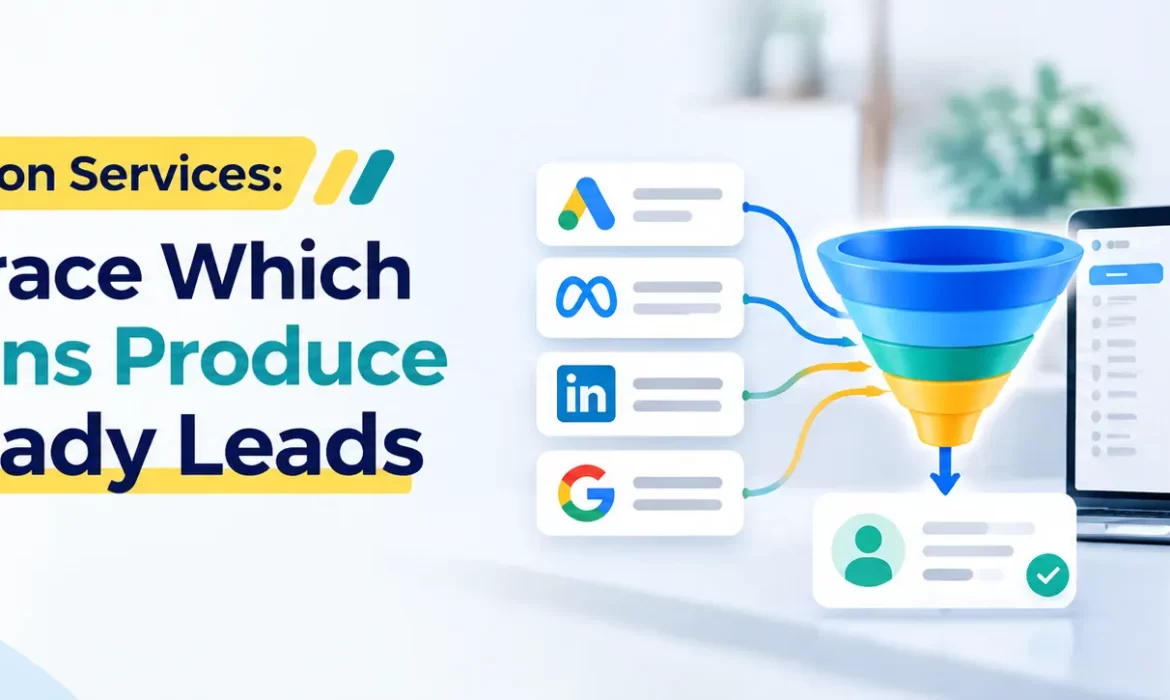
A good lead generation service does more than fill your inbox with form fills. It tells you which campaigns bring in buyers who are actually ready to speak to sales. If your monthly report says “240 leads” but your sales team calls 200 dead ends, that number is not helping you grow.
This guide shows you how to trace every lead back to its source, separate casual enquiries from real buyers, and put your digital marketing budget behind what works.
What You'll Find in This Guide
- Why raw lead counts mislead you
- What “sales-ready” really means
- A five-step tracing system
- A worked example with real-style numbers
- Mistakes that quietly ruin tracking
- What to ask before hiring a lead generation agency in Chennai
- FAQs
Ready to Grow Your Business Online?
Build a stronger digital presence with a strategy designed around your business goals.
Why Lead Count Is a Misleading Number
Most campaign reports celebrate volume. Cost per lead looks great when a Meta ad pulls in 120 sign-ups for ₹550 each. But if only four of those people ever pick up the phone for a proposal, the real cost is far higher.
Cheap leads often come from curiosity, not intent. A person who grabs a free PDF and a person who asks for a price on 50 industrial pumps are in very different places. A lead generation service worth paying for measures the second kind.
What Does "Sales-Ready" Actually Mean?
There is no universal definition, so write your own with your sales team. A lead is usually sales-ready when it passes most of these checks:
- Fit: right industry, company size, or location
- Need: a clear problem you can solve
- Budget: some indication they can pay
- Authority: the person enquiring can influence or make the decision
- Timing: they plan to act within a few weeks or months
Here is how the common lead stages differ:
| Lead Stage | Who They Are | Typical Action | What to Do Next |
|---|---|---|---|
|
STAGE 01
Raw Lead |
Anyone who has shared their contact details. | Downloaded a guide or registered for a webinar. | Nurture with relevant email or WhatsApp follow-ups. |
|
STAGE 02
Marketing-Qualified Lead (MQL) |
A prospect who fits your target customer profile and shows meaningful interest. | Visited the pricing page or engaged with several marketing emails. | Score the lead against your qualification criteria and follow up. |
|
STAGE 03
Sales-Qualified Lead (SQL) |
A prospect with a confirmed business need, suitable budget, and realistic timeline. | Requested a quotation, consultation, or product demo. | Arrange a sales call promptly, ideally within hours. |
Your tracking should push every campaign’s leads through these stages, not stop at the first row.
The Five-Step System to Trace Campaign Quality
Step 1: Tag Every Link You Publish
Use UTM parameters on every ad, email, and social post. At minimum, set source, medium, and campaign name. Keep naming consistent, because “LinkedIn”, “linkedin” and “LI” will show up as three different sources in your reports.
A simple convention works well: source = google, medium = cpc, campaign = pumps-chennai-oct.
Step 2: Pass the Source Into Your CRM
The tag is useless if it disappears when the form is submitted. Add hidden fields to your forms that capture the UTM values, landing page, and date. Then make sure they map to fields in your CRM, so a salesperson can see exactly where each contact came from.
Step 3: Track Calls and WhatsApp Too
In India, a large share of serious buyers skip the form and call or message directly. Skip these touchpoints and your strongest channels will look weaker than they really are.
- Show a different tracking phone number for each traffic source
- Add click-to-WhatsApp links with a unique tag per campaign
- Have your sales team note the caller’s own words about where they first heard of you
That last point is low-tech, but it catches what software misses.
Step 4: Score and Qualify Each Lead
Give points for fit and behaviour. For example:
- Company in your target industry: +20
- Visited pricing or services page: +15
- Requested a quote: +30
- Used a free email address with no company name: −10
Decide a threshold, say 50 points, where the lead moves to sales. Review it monthly with the sales team and adjust based on who actually converted.
Step 5: Report by Campaign, Down to Revenue
Create a single report that traces each campaign from the first click through to a signed deal. The columns that matter are leads, SQLs, deals won, revenue, and cost per SQL. Cost per lead can sit in the table, but it should never be the headline.
Make this a habit rather than a one-off task. Block thirty minutes every Friday for a short sales-and-marketing huddle. Open the report, pick the two campaigns with the most SQLs and the two with the fewest, and ask the sales team why. Their answers, such as wrong city, wrong budget, or nobody picking up the phone, tell you exactly what to change in your targeting and form questions next week.
A Worked Example (Illustrative Numbers)
Imagine a B2B equipment supplier running four campaigns in one month:
| Channel | Spend | Leads | SQLs | Cost per Lead | Cost per SQL |
|---|---|---|---|---|---|
| Google Ads (Search) | ₹72,000 | 90 | 6 | ₹800 | ₹12,000 |
| LinkedIn Ads | ₹60,000 | 30 | 9 | ₹2,000 | ₹6,667 |
| SEO Blog Content | ₹30,000 | 45 | 8 | ₹667 | ₹3,750 |
| Meta Lead Forms | ₹66,000 | 120 | 4 | ₹550 | ₹16,500 |
Look at the Meta row. Meta brought the biggest crowd at the cheapest price per name, yet every sales-ready buyer it produced cost the most. LinkedIn looks costly per lead but delivers the most SQLs. SEO content is the quiet winner.
Without source tracking and qualification, this business would have doubled down on Meta. With it, they shift budget toward LinkedIn and content, and fix the Meta targeting before spending more.
Mistakes That Quietly Ruin Lead Tracking
- No agreement on lead quality. Marketing and sales use different definitions, so reports never match reality.
- Last-click only. A buyer may find you through a blog, return through a search ad, and convert after a LinkedIn retargeting ad. Crediting only the last touch undervalues early-stage content.
- Slow follow-up. Interest cools fast, and a buyer who hears back after two days may already be talking to a competitor. Respond within an hour where you can.
- Messy CRM data. Duplicate contacts and blank source fields make any report unreliable.
- Judging campaigns too early. Where deals take a quarter to close, this month’s campaign may not show any revenue for a long while. Track SQLs as the early signal.
Choosing a Lead Generation Agency in Chennai
If you plan to hire help, a lead generation agency in Chennai that understands local buying habits can save you months of trial and error. Before signing, ask:
- Do you report on SQLs and revenue, or only on lead counts?
- How will you connect our website, CRM, and call tracking?
- Can I see a sample report from a similar business?
- Who owns the ad accounts and data if we part ways?
- How often will you review lead quality with our sales team?
Be cautious of anyone promising a fixed number of leads without asking about your sales process. Good digital marketing starts with your customer and your closing rate, not with a vanity target.
Frequently Asked Questions
What is a lead generation service?
It is a service that attracts potential customers and captures their details through channels such as search ads, SEO, social media, email, and landing pages. The better ones also qualify leads before handing them to sales.
How do I know which campaign produced a sale?
Tag every link with UTM parameters, pass those values into your CRM, and record the source against each deal. Then compare campaigns by revenue and cost per SQL.
What is a good cost per lead?
There is no fixed answer. It depends on your deal size and closing rate. A ₹2,000 lead that closes often can be far cheaper than a ₹300 lead that never does.
How long before I see results?
Paid campaigns can send leads within days. SEO and content usually take three to six months to build steady, higher-quality enquiries.
Should small businesses outsource lead generation?
If you lack time or tracking know-how, yes. Start with one or two channels, and insist on clear reporting before scaling.
Final Takeaway
The real value of a lead generation service is clarity: knowing which campaigns create conversations that end in revenue. Tag your sources, track every channel including calls and WhatsApp, agree on what “sales-ready” means, and report on cost per SQL instead of cost per lead.
Do this for a quarter and your budget decisions stop being guesses. If you would rather not build the system alone, choose a partner who is willing to be measured on sales-ready leads, not just volume.
Ready to Take Your Online Marketing to the Next Level?
Connect with our team and create a digital marketing strategy that supports your business growth.