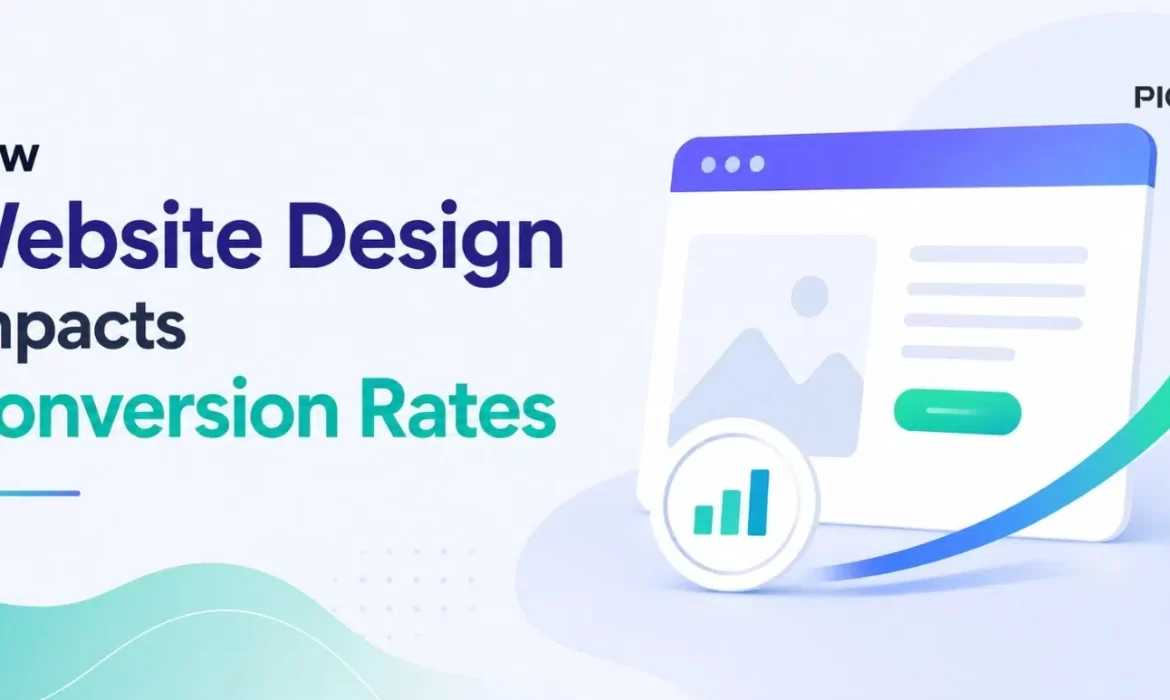
Website design impacts every metric your business cares about — from how long a visitor stays on your page to whether they become a paying customer. In the world of digital marketing, your website is not just a digital brochure; it is your most powerful sales tool. Understanding how website design impacts conversion rates is the difference between a business that thrives online and one that quietly loses leads to competitors.
First Impressions Are Made in Milliseconds
Visitors form an opinion about your website in less than 50 milliseconds. That means before a single word is read, your design has already spoken. A cluttered, outdated layout signals unreliability. A clean, well-structured design communicates professionalism and builds trust instantly.
For business owners investing in digital marketing, this is a critical insight. You could be spending thousands on paid ads or SEO — but if traffic lands on a poorly designed page, that investment evaporates. Website design impacts not just aesthetics, but the emotional and psychological journey of every visitor.
Navigation: The Silent Conversion Driver
One of the most overlooked elements of web design is navigation. When users cannot find what they are looking for in seconds, they leave — and they rarely come back. A well-organized site structure reduces friction, guides visitors toward key pages, and keeps them engaged long enough to take meaningful action.
Effective navigation also supports your SEO efforts. Search engines reward websites that offer logical, crawlable structures with clean internal linking. This means better rankings, more organic traffic, and ultimately, more opportunities for lead generation. Good design and good SEO are not separate disciplines — they are deeply interconnected.
Page Speed, Mobile Design, and the Modern User
Today’s business audience is time-pressed. If your website takes more than three seconds to load, over half of your visitors will abandon it entirely. Page speed is a design decision — every oversized image, bloated plugin, or unoptimised script is a direct threat to your conversion rate.
Mobile responsiveness is no longer optional. With more than 60% of web traffic coming from mobile devices, a website that looks broken on a smartphone is a conversion killer. Website design impacts how your brand is perceived across every device, screen size, and connection speed. A seamless mobile experience builds trust — and trust converts.
📱 Mobile-First Layout
Responsive design ensures a consistent experience across all devices and improves SEO rankings significantly.
⚡ Fast Load Times
Optimised pages reduce bounce rates and signal quality content to search engines.
🎯 Visual Hierarchy
Strategic use of space, contrast, and typography directs attention to what matters most.
🛡️ Trust Signals
Reviews, certifications, and security badges reduce hesitation and increase form completions.
Visual Hierarchy and the Psychology of Conversion
Conversion-focused design is rooted in psychology. By controlling where the eye travels on a page — through font size, color contrast, whitespace, and imagery — you can guide users toward specific actions. Whether that action is filling out a contact form, requesting a quote, or making a purchase, visual hierarchy is the invisible hand that directs it.
Businesses that treat their website as a passive online presence miss the enormous opportunity that intentional design presents. Every element on the page should serve a purpose tied to your lead generation goals. Buttons should be prominent and compelling. Headlines should speak directly to the visitor’s problem. Forms should be short, simple, and easy to complete.
Trust Signals That Turn Browsers Into Buyers
In digital marketing, trust is currency. Visitors who don’t trust your brand won’t convert — regardless of how attractive your offer is. Thoughtful website design incorporates trust signals that lower hesitation and boost confidence. These include customer testimonials, case studies, industry certifications, security badges, and transparent contact information.
A professionally designed website communicates that your business is established, reliable, and worth engaging with. When that trust is established through design, lead generation becomes far more effective — because visitors feel safe taking the next step.
What to Audit on Your Website Right Now
- Is your homepage headline clear, specific, and benefit-focused?
- Does your site load in under 3 seconds on mobile?
- Are your calls-to-action visible above the fold?
- Is your navigation logical and limited to 5–7 primary items?
- Do you display social proof on key conversion pages?
- Is your contact form short — ideally 3 fields or fewer?
- Are your fonts and colors consistent across all pages?
Design Is Not a Cost — It’s a Revenue Strategy
Many businesses treat website design as a one-time expense rather than an ongoing investment in growth. But the data is clear: companies that prioritise design outperform their competitors in conversions, customer retention, and brand equity. Website design impacts your bottom line in ways that are measurable, scalable, and significant.
When paired with a strong digital marketing strategy — including SEO, content marketing, and paid search — a well-designed website becomes your highest-performing salesperson. It works around the clock, speaks to every visitor at scale, and converts interest into action without requiring additional headcount.
The businesses winning online are not necessarily those with the biggest marketing budgets. They are the ones who understand that website design impacts every touchpoint of the customer journey — and who invest accordingly.
Is Your Website Working Hard Enough?
Get a free design and conversion audit. We’ll identify exactly where your site is losing leads — and how to fix it.
Request Your Free Audit →