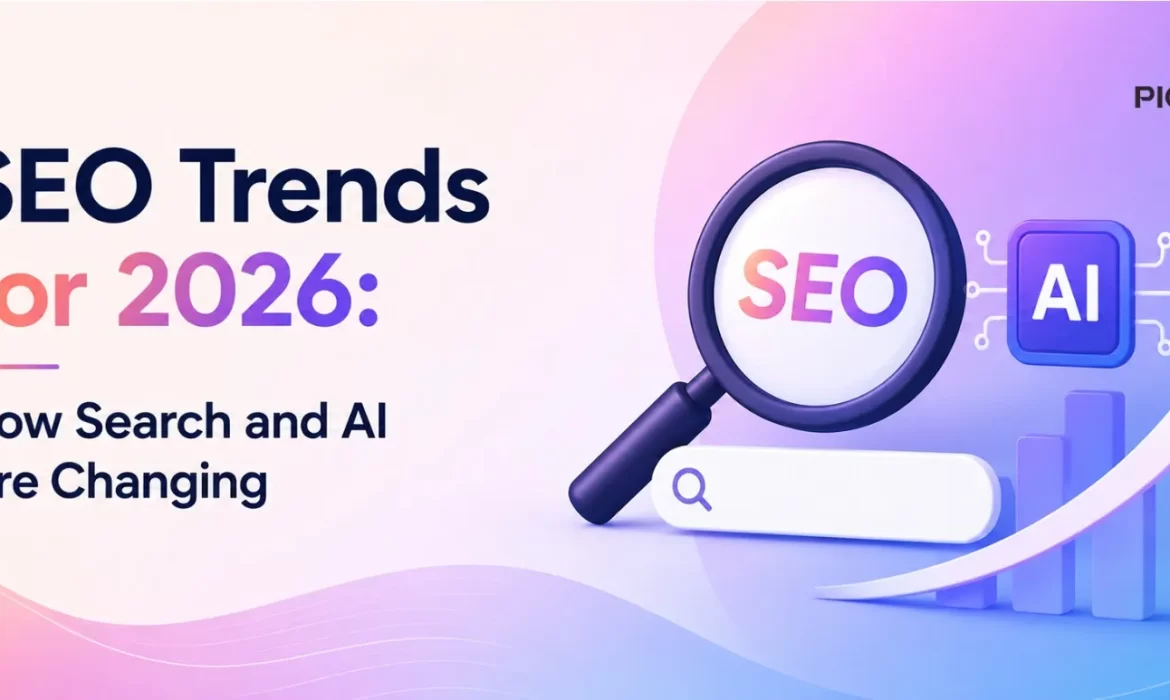
If you run a business and search has felt different lately, you’re not imagining it. SEO Trends for 2026 are reshaping how people find businesses online, and the shift is bigger than another Google algorithm update.
Search engines no longer just list links. They read your content, understand it, and sometimes answer the question before anyone visits your website. For business owners who depend on digital marketing, social media marketing, and lead generation to bring in customers, this changes what “ranking well” actually means.
This guide breaks down what’s really changing in search this year, why it matters for your business, and what you can do about it, without the jargon.
Why SEO Trends for 2026 Look So Different This Year
For nearly two decades, SEO followed a familiar pattern: research keywords, optimize a page, build some backlinks, and wait for rankings to climb. That formula isn’t dead, but it’s no longer enough on its own.
Today, AI systems read and summarize web content before a user ever clicks a result. Someone might ask a question and get a complete answer directly on the search page, generated from several websites, including possibly yours. That’s a win if your content gets cited. It’s a missed opportunity if it doesn’t.
Here’s what’s driving the shift:
- AI Overviews and AI-generated answers now appear above traditional search results for many queries.
- Search has spread beyond Google, into YouTube, social platforms, and AI chat tools where people now ask questions directly.
- Zero-click searches mean people get answers without visiting any website at all.
- Trust and real expertise matter more than keyword density ever did.
None of this means SEO is going away. It means the businesses that adapt their digital marketing approach now will have a real head start over competitors who keep doing things the old way.
AI Search Is Changing How Customers Find You
The biggest story in SEO Trends for 2026 is artificial intelligence. AI Overviews, chatbots, and conversational assistants are becoming a normal part of how people search, not a niche behavior.
Instead of typing two or three keywords, people now ask full questions, the way they’d ask a friend. “Best digital marketing agency for small businesses near me” gets a very different kind of response than it would have five years ago. Search engines try to answer that question directly, pulling from content that’s clear, well-organized, and genuinely useful.
What this means for your business
If your website content is vague, packed with keywords, or written purely to rank rather than to help, AI systems are far less likely to feature it. Content that clearly explains a topic, answers real questions, and is organized with proper headings has a much better shot at being picked up and cited.
- Structure your content with clear headings so both readers and AI can scan it quickly.
- Answer the main question early in the page, then expand with details and examples.
- Avoid stuffing keywords; write the way you’d explain something to a customer in person.
This is also where strong digital marketing fundamentals still apply. A well-optimized website, clear messaging, and helpful content work hand in hand with whatever AI search throws at us next.
Search Now Happens Everywhere, Not Just on Google
One of the more practical SEO Trends for 2026 is that search has stopped being a single-platform activity. People discover businesses on Instagram, YouTube, LinkedIn, and AI apps just as often as they do on Google.
A potential customer might see your brand in a short video, look you up on social media, then finally search your name on Google before reaching out. Every one of those touchpoints needs to tell a consistent story about who you are and what you offer.
Why social media marketing now overlaps with SEO
Social media marketing isn’t separate from search anymore, it feeds it. Search engines and AI tools increasingly factor in how people talk about your brand online: shares, comments, reviews, and mentions all add up to signals of trust.
- Keep your business information (name, services, location) consistent across your website, Google Business Profile, and social channels.
- Encourage genuine customer reviews; they’re now a meaningful trust signal for both search engines and AI tools.
- Post content on social platforms that reflects the same expertise and tone as your website.
Businesses that show up consistently across these channels build the kind of presence that search engines and AI assistants are now built to recognize and trust.
Zero-Click Search: Why Visibility Now Matters More Than Clicks
A growing share of searches end without a click. The user gets their answer directly in an AI Overview, a featured snippet, or a knowledge panel, and moves on. This is a major piece of the SEO Trends for 2026 conversation, because it changes how you should measure success.
Website traffic is still important, but it’s no longer the whole picture. Being mentioned or cited as a source inside an AI-generated answer builds awareness and trust, even if that particular search doesn’t result in a visit. Over time, that visibility brings people back to your brand when they’re ready to act.
How to stay visible even in a zero-click world
- Add clear FAQs to your pages that directly answer common customer questions.
- Use structured, scannable formatting: short paragraphs, headers, and bullet points.
- Track brand mentions and citations, not just clicks, when reviewing your marketing performance.
This is also a reminder that lead generation strategies need more than one channel feeding them. Relying on search traffic alone leaves you exposed; a mix of SEO, social media marketing, and paid efforts keeps your pipeline steady.
Trust and Real Experience Are Becoming Ranking Factors
Search engines and AI platforms are placing far more weight on genuine expertise and credibility, often summarized as E-E-A-T (Experience, Expertise, Authoritativeness, Trustworthiness). Keyword placement alone won’t carry a page the way it used to.
In practice, this means content written by someone with real, hands-on experience in a topic tends to perform better than generic, surface-level writing. Clear author information, honest case studies, and original insights all help establish that your business knows what it’s talking about.
- Add author bios or business credentials to blog content where relevant.
- Share real examples, case studies, or results instead of generic claims
- Keep information accurate and up to date; outdated or inconsistent details quietly erode trust.
For a business in any competitive local market, this trust-first approach pays off well beyond SEO. It strengthens how customers perceive your brand across every digital marketing channel you use.
Practical Steps to Get Ahead of SEO Trends for 2026
Understanding these shifts is one thing. Acting on them is what actually moves the needle. Here’s a practical starting point for business owners who want their digital marketing to keep working in this new search landscape.
1. Build content around topics, not just keywords
Instead of writing one page per keyword, create a cluster of related content around a topic your customers care about. This signals depth and authority, and it naturally supports better lead generation by capturing people at different stages of their search.
2. Write for people first, structure for AI second
Lead with a direct, clear answer, then explain further with examples and context. This approach works well for human readers and happens to be exactly what AI systems look for when selecting content to cite.
3. Strengthen your local and social presence
Keep your Google Business Profile accurate, gather authentic reviews, and stay active on the social platforms where your customers actually spend time. Local relevance and social proof are carrying more SEO weight than ever.
4. Diversify your content formats
Video, short guides, infographics, and FAQs all give you more chances to appear across different types of search results. A single blog post is a starting point, not the finish line.
5. Track visibility, not just rankings
Keep an eye on brand mentions, AI citations, and engagement quality alongside traditional rankings. A complete view of your search performance gives you a clearer read on what’s actually working.
FAQ
Is SEO still important in 2026 with the growth of AI?
Yes. SEO is still important, but the way businesses approach it is changing. AI can provide direct answers to users, making it important to focus on useful content, genuine expertise, strong brand credibility and visibility across multiple search platforms.
How is AI changing the way people search for information?
AI is making search more conversational and answer-focused. Users are increasingly asking complete questions instead of searching only with short keywords, which makes understanding search intent and providing clear, helpful answers more important.
What are zero-click searches and why do they matter?
A zero-click search happens when users get the information they need directly from the search results page without visiting a website. This means businesses need to think beyond clicks and focus on overall visibility, brand recognition and appearing where users search for answers.
Should businesses focus only on Google for SEO in 2026?
No. Google remains important, but users also search through AI tools, YouTube, social media platforms, maps and other digital channels. Businesses should build visibility across the platforms that are relevant to their audience.
What type of content is likely to perform better in 2026?
Useful, accurate and genuinely helpful content is likely to remain important. Businesses should focus on original insights, real experience, clear explanations and content that solves actual user problems rather than publishing large volumes of generic content.
Is keyword research still useful for SEO?
Yes. However, keyword research should go beyond simply finding high-volume search terms. Businesses should understand search intent, user questions and the type of content people expect to find when they perform a search.
Why is local SEO important for businesses?
Local SEO helps businesses become more visible when people search for products or services in a specific area. Accurate business information, genuine customer reviews and relevant local content can strengthen visibility in local search results.
What should businesses do now to prepare for SEO changes in 2026?
Businesses should strengthen the fundamentals by creating useful content, improving website experience, understanding their audience, building brand trust and avoiding complete dependence on a single search platform or source of traffic.
Final Thoughts
SEO Trends for 2026 boil down to one core idea: search engines and AI tools now reward businesses that are genuinely helpful, clearly organized, and consistently visible across channels. Keyword tricks and shortcuts are losing ground to real expertise and trust.
The good news is that this shift favors businesses willing to put in honest, consistent effort. By combining solid SEO fundamentals with smart digital marketing, active social media marketing, and a steady lead generation strategy, you put your business in a strong position, no matter how search continues to evolve.