

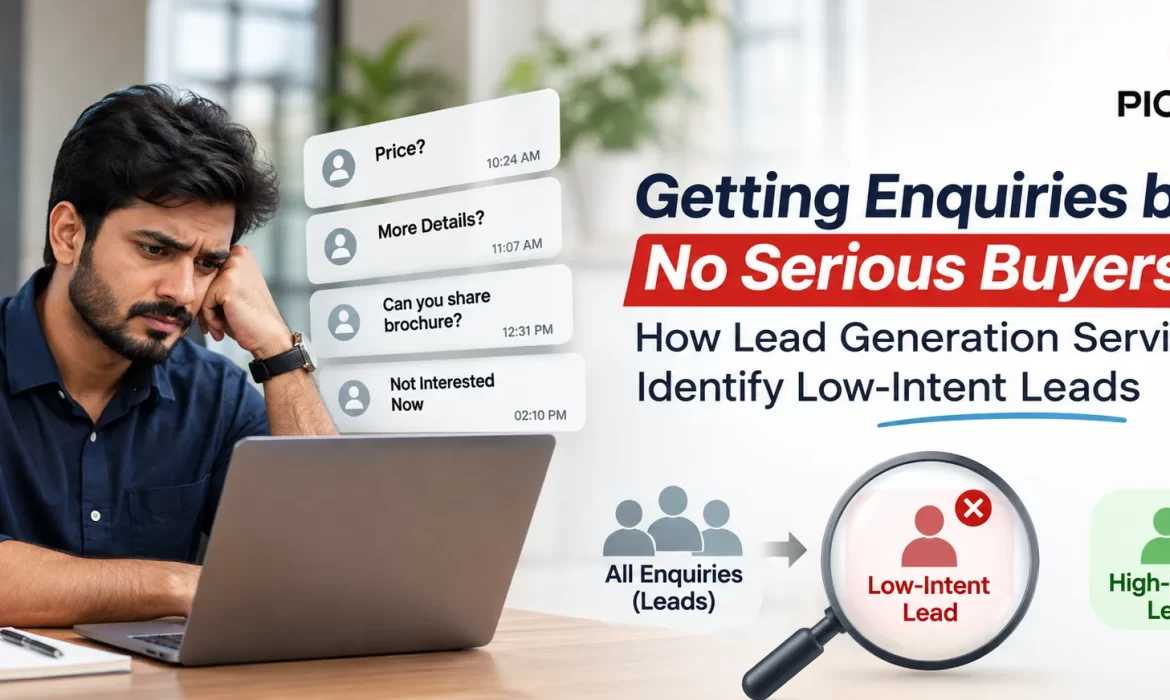
Your inbox is busy, your form fills are climbing, and still nobody is ready to buy. This guide explains how lead generation services identify low-intent leads, so your sales team stops chasing curiosity and starts talking to people with a real budget and a real deadline.
IN THIS GUIDE
- 1. What a low-intent lead is
- 2. Why enquiries don’t become buyers
- 3. Six ways agencies spot them
- 4. High vs low intent
- 5. A real-world style example
- 6. What to fix this month
- 7. FAQs
What Is a Low-Intent Lead?
A low-intent lead is someone who contacts you without a near-term plan to purchase. They might be comparing prices for a report, collecting ideas, a student, a competitor, or simply someone who clicked an ad out of curiosity.
They are not fake. They are just early, or unqualified. The problem starts when they sit in the same pipeline as genuine buyers and get the same amount of sales attention.
Ready to Grow Your Business Online?
Build a stronger digital presence with a strategy designed around your business goals.
Why You Get Enquiries but No Serious Buyers
Most businesses blame the sales team first. In practice, the cause usually sits upstream, in how the leads were attracted in the first place.
- Broad targeting. Ads aimed at “anyone interested in machinery” pull in hobbyists along with procurement managers.
- Low-friction forms. A form asking only for name and phone number invites casual submissions.
- Discount-heavy messaging. Offers like “free quote in 5 minutes” attract bargain hunters.
- Wrong keywords. Informational searches (“what is a hydraulic press”) bring readers, not buyers.
- No feedback from sales. Marketing keeps optimising for lead count because nobody tells it which leads actually closed.
6 Ways Lead Generation Services Identify Low-Intent Leads
A good lead generation agency does not simply hand over a list of contacts. It builds filters into the process. Here is what that looks like.
Source and keyword analysis
Not every channel produces the same quality. The agency tags every lead with its source, campaign and search term, then compares them. Leads from “price list free download” searches tend to behave very differently from leads who searched “bulk supplier near me with GST invoice.”
Qualifying questions on the form
One or two smart questions can sort leads before a human ever speaks to them:
- What quantity are you looking to order?
- When do you plan to purchase: this month, this quarter, or just exploring?
- Is this for your own business or for resale?
- A dropdown for budget range or timeline costs you a few form fills but removes a large share of casual ones.
Behaviour tracking
What a person does before enquiring matters more than what they say. Agencies look at:
- Pages visited (pricing, case studies and contact pages signal intent; a single blog visit usually does not)
- Time spent and return visits
- Whether they downloaded a spec sheet, brochure or catalogue
- Whether they opened and clicked follow-up emails
Lead scoring
Each action earns or loses points. A visit to the pricing page might add 10, a company email address adds 5, a free webmail address with a one-word company name might subtract 5. When the total crosses a set threshold, the lead is passed to sales. Everything below goes into nurturing instead.
Verification calls and data checks
A short screening call, run by the agency or an inside sales team, confirms the basics: is the number real, does the company exist, does this person have buying authority? Many low-intent leads fall away here, and that is the point.
Closing the loop with sales
This is the step most teams skip. The sales team marks each lead as qualified, unqualified or won, and the agency uses that data to adjust targeting. Over a few weeks, the campaigns start favouring the sources and audiences that produce revenue rather than volume.
High-Intent vs Low-Intent Leads: How to Tell Them Apart
| Signal | High-intent lead | Low-intent lead |
|---|---|---|
| Message | Mentions quantity, specs or deadline | “Send details” or “price list” |
| Contact details | Business email, real company name | Personal email, vague company |
| Pages viewed | Pricing, case studies, contact | One blog post or homepage |
| Follow-up | Replies within a day | Silent or slow |
| Questions asked | Delivery, payment terms, warranty | Only “how much?” |
| Source | Branded or specific search | Broad social or display ad |
An Example: Industrial Equipment Supplier
Imagine a B2B supplier running Google Ads and Facebook ads for packaging machines. They receive 120 enquiries a month, but only four turn into orders. An agency audits the lead data and finds three things:
- Most enquiries came from a broad Facebook campaign. Only a handful closed.
- Almost every closed deal came from searches containing words like “manufacturer,” “supplier” or a specific machine model.
- The form asked only for name and phone, so nobody revealed their timeline.
The fix: pause the broad campaign, shift budget to specific search terms, and add two form questions on quantity and purchase timeline. Enquiries drop to around 60 a month, but the number of qualified conversations goes up, and the sales team finally has time to follow each one properly.
Fewer leads, better leads. That is usually the real win.
What You Can Fix This Month
You do not need a big budget to start filtering low-intent leads. Try this checklist
- Add a timeline or quantity field to your enquiry form.
- Tag every lead by source in your CRM or even a simple spreadsheet.
- Ask your sales team to mark each lead as good, average or poor for two weeks.
- Compare which campaigns produced the “good” ones.
- Move budget away from channels that produce volume without conversations.
- Set up a separate email sequence for early-stage leads, so they are nurtured rather than ignored.
How Digital Marketing and Lead Quality Connect
Good digital marketing is not about collecting the biggest number of contacts. It is about matching the message to the stage the buyer is in. Educational content works for early researchers. Case studies, comparison pages and clear pricing guidance work for people close to deciding.
When a lead generation agency designs content and campaigns around those stages, low-intent visitors self-select out earlier, and serious buyers find a clearer path to contact you.
Questions to Ask Before Hiring a Lead Generation Agency
- How do you define a qualified lead?
- Do you report on lead quality, or only lead volume?
- Will you work with feedback from my sales team?
- What does your scoring or screening process look like?
- Can you show examples of campaigns where you reduced lead count but improved conversions?
Vague answers to these questions are a warning sign.
Frequently Asked Questions
No. Many become customers later. They just should not be handled by your sales team right now. Put them into a nurture sequence with useful content and check back in a few weeks.
It varies by industry and price point. For high-value B2B services, 10 to 25 percent qualifying is common. If yours is far lower, review targeting and forms first.
Yes, usually by a noticeable margin. But the ones who complete a longer form are generally more serious, so conversion per lead tends to improve.
Most businesses notice a change within four to six weeks of adjusting targeting and forms, provided sales feedback is flowing back to marketing.
Smaller businesses can start with tagging, form questions and sales feedback. An agency becomes valuable when you have multiple channels, higher ad spend, or limited time to analyse the data.
Final Thoughts
A flood of enquiries feels like progress, but only conversations with real buyers pay the bills. The way lead generation services identify low-intent leads comes down to a handful of habits: tracking sources, asking sharper questions, watching behaviour, scoring consistently and learning from sales. Start with one or two of these this week, and you will quickly see which of your leads were worth the call all along.
Ready to Take Your Online Marketing to the Next Level?
Connect with our team and create a digital marketing strategy that supports your business growth.