Table of Contents
- Introduction
- What Is SEO?
- What Is Paid Advertising?
- SEO vs Paid Ads: The Core Differences
- Which Delivers Better Quality Leads?
- Comparison Table: SEO vs Paid Ads
- Step-by-Step Framework: Choosing the Right Strategy
- When to Use SEO, Paid Ads, or Both
- The Role of Social Media Marketing
- Real-World Example
- FAQs
- Conclusion
Introduction
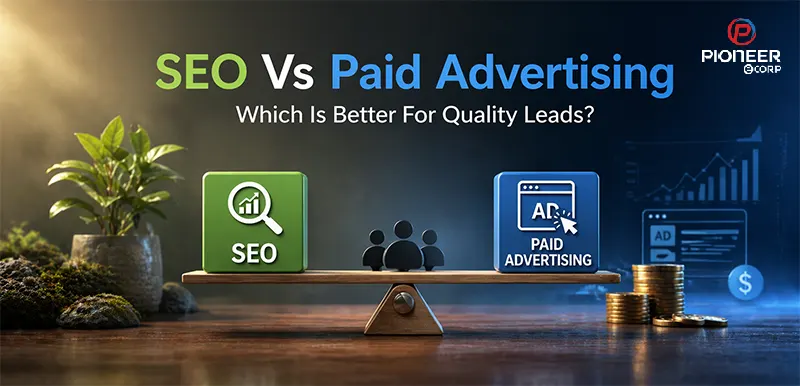
If you have been running a business online, you have probably asked this question at least once: SEO vs paid ads — which one is actually worth my time and money?
It is one of the most debated topics in digital marketing today. Both strategies can bring traffic to your website. But when it comes to quality leads — people who are genuinely ready to buy — the answer is a bit more nuanced.
In this guide, we break down both approaches clearly, compare them head-to-head, and help you figure out which one fits your business goals best.
What Is SEO?
SEO (Search Engine Optimization) is the process of improving your website so it ranks higher on search engines like Google — without paying for placement.
It involves:
- Optimizing your website content with the right keywords
- Building backlinks from trusted websites
- Improving your site speed and mobile experience
- Creating helpful, high-quality content that answers user questions
SEO is a long-term play. It takes time to build, but once you rank well, the traffic keeps coming — for free.
Key benefit: Organic traffic builds trust. Users who find you through search tend to see your brand as more credible.
What Is Paid Advertising?
Paid advertising (also called PPC — Pay Per Click) means you pay to show your ads to your target audience. The most popular platforms include:
- Google Ads — your ad appears at the top of search results
- Facebook and Instagram Ads — part of social media marketing, ideal for targeting by demographics and interests
- LinkedIn Ads — great for B2B lead generation
- YouTube Ads — powerful for video-based brand awareness
With paid ads, you get instant visibility. The moment your campaign goes live, your business can appear in front of thousands of potential customers.
Key benefit: Speed and precision. You can target specific audiences and see results within hours.
SEO vs Paid Ads: The Core Differences
At the heart of it, these two strategies work in very different ways:
SEO earns its position over time. You create content, optimize your site, and gradually climb the search rankings. There is no direct cost per click, but it requires consistent effort — content creation, technical updates, and link building.
Paid advertising buys its position immediately. You set a budget, choose your audience, and your ad goes live. But the moment your budget runs out, your visibility disappears.
Think of SEO like planting a tree. It takes months to grow, but once it does, it provides shade year after year. Paid ads are more like renting a billboard. It works while you are paying for it.
Which Delivers Better Quality Leads?
This is the real question — and the answer depends on what kind of lead quality you are measuring.
SEO Leads: High Intent, High Trust
People who find your website through organic search are usually deep in the research phase. They searched for something specific, found your content, and clicked because it matched what they needed. This kind of visitor often converts better because:
- They came to you on their own terms
- They spent time reading your content
- They already see you as a credible source
According to industry data, SEO leads have a significantly higher close rate compared to outbound leads like cold calls or display ads.
Paid Ad Leads: Fast, Scalable, Targeted
Paid ads let you put your offer in front of the exact person you want — by age, location, interest, job title, and more. This is especially powerful in social media marketing, where platforms like Facebook and Instagram have rich user data.
However, paid ad leads can be more “top of funnel” — people who saw your ad but were not necessarily searching for you. Conversion depends heavily on how compelling your ad and landing page are.
Verdict: SEO tends to bring higher-quality leads over time. Paid ads bring faster, more scalable volume but may require more nurturing.
Comparison Table: SEO vs Paid Ads
| Factor | SEO | Paid Advertising |
|---|---|---|
| Cost | Low (time investment) | High (ongoing budget) |
| Speed of Results | Slow (3–6 months) | Fast (immediate) |
| Lead Quality | High intent, high trust | Variable, depends on targeting |
| Longevity | Long-lasting | Stops when budget ends |
| Scalability | Gradual | Highly scalable |
| Click Trust | High (organic results trusted more) | Lower (ads are labeled) |
| Best For | Long-term brand building | Quick campaigns, product launches |
| Technical Skill Needed | Moderate to high | Moderate |
| ROI Timeline | 6–12 months | Immediate but ongoing cost |
Step-by-Step Framework: Choosing the Right Strategy
Use this simple framework to decide what works for your business:
Step 1: Define Your Goal Are you trying to build brand authority long-term? Go with SEO. Need leads this week for a product launch? Run paid ads.
Step 2: Check Your Budget If your budget is tight, invest in SEO — it pays off without ongoing ad spend. If you have a flexible budget and need fast results, paid ads give you control.
Step 3: Know Your Timeline New business with zero online presence? Paid ads can get you traction while your SEO builds up. Established website with good content? Double down on SEO.
Step 4: Analyze Your Audience Where does your ideal customer spend time? If they are on Instagram or LinkedIn, social media marketing through paid ads makes sense. If they search Google for solutions, SEO is your priority.
Step 5: Test, Measure, and Combine The smartest digital marketing strategy often uses both. Run paid ads for immediate leads while your SEO builds a steady organic pipeline.
When to Use SEO, Paid Ads, or Both
| Situation | Best Approach |
|---|---|
| New business, fast traction needed | Paid Ads |
| Limited budget, long-term growth | SEO |
| Product launch or seasonal campaign | Paid Ads |
| Establishing brand authority | SEO |
| Targeting very specific demographics | Paid Ads (Social Media Marketing) |
| Capturing high-intent search traffic | SEO |
| Maximum lead volume at scale | Both combined |
The Role of Social Media Marketing
It is worth noting that social media marketing sits at an interesting intersection of both worlds.
Organic social media (posting content for free) shares similarities with SEO — it builds trust and audience over time, but without the direct search intent signal.
Paid social media advertising (Facebook Ads, Instagram Ads, LinkedIn Ads) is powerful for awareness and retargeting. It works best when combined with a solid SEO strategy — your organic content builds credibility, while your paid social ads scale reach.
In a well-rounded digital marketing plan, all three — SEO, paid search ads, and social media marketing — play different but complementary roles.
FAQs
Conclusion
There is no single winner in the SEO vs paid ads debate — it depends entirely on your goals, timeline, and resources.
If you want sustainable, high-quality leads that compound over time, SEO is your foundation. If you need speed, scale, or precise audience targeting right now, paid advertising delivers. And when used together as part of a broader digital marketing strategy — supported by social media marketing — you get the best of both worlds.
The smartest businesses do not choose one over the other. They use SEO to build trust and paid ads to accelerate growth — then let the two strategies reinforce each other over time.
Start where you are. Build what lasts. And always keep testing.