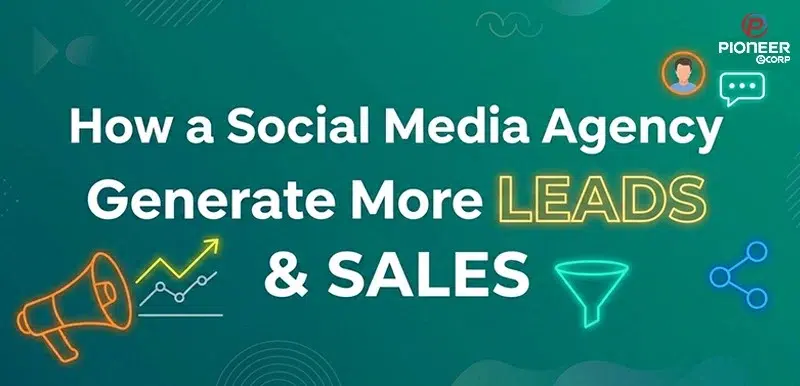
How a Social Media Agency Helps You Generate More Leads and Sales
A social media agency does more than just post content—it builds a system that consistently attracts qualified prospects and converts them into paying customers. While many businesses treat social media as an afterthought, forward-thinking companies recognize it as a primary channel for predictable revenue growth.
The data backs this up. Research shows that 71% of consumers now rely on social media to inform their purchasing decisions. If your social presence isn’t actively generating leads and sales, you’re leaving money on the table.
This guide explains exactly how a social media agency creates measurable business results, what the process looks like, and how to choose the right partner for your goals.
Table of Contents
- What Does a Social Media Agency Actually Do?
- How a Social Media Agency Drives Lead Generation
- The Full-Funnel Approach to Social Sales
- Why Data and Targeting Matter More Than Ever
- Two Critical Sections Most Agencies Won’t Tell You (But You Need to Know)
- The Trust Transfer Problem: Moving Beyond the Founder
- The Full-Funnel Measurement Framework
- How to Choose the Right Social Media Agency
- FAQs About Social Media Lead Generation
What Does a Social Media Agency Actually Do?
A social media agency manages your brand’s presence across platforms like LinkedIn, Instagram, Facebook, TikTok, and X with one primary goal: generating leads and sales that impact your bottom line.
The difference between an agency and a freelancer or in-house hire is the full-system approach. A professional agency doesn’t just schedule posts—it handles:
- Audience research and targeting – Understanding who your ideal customers are, where they spend time online, and what content resonates with them
- Content creation and strategy – Producing videos, graphics, copy, and interactive content designed to stop the scroll and drive action
- Paid advertising management – Running cost-efficient campaigns across Meta, LinkedIn, TikTok, and Google platforms
- Community management – Engaging with followers, responding to inquiries, and nurturing relationships that convert
- Performance tracking and optimisation – Continuously testing and improving based on real data
Agencies that deliver the best results integrate social media with broader digital marketing efforts. When social strategy connects with SEO, content marketing, and email nurture sequences, the impact multiplies.
How a Social Media Agency Drives Lead Generation
Lead generation is the lifeblood of any growing business. A social media agency creates systems that attract, engage, and convert potential customers through several proven methods.
1. Precision Targeting Through Paid Social
Organic reach alone won’t generate consistent leads. Social platforms have sophisticated targeting options that allow agencies to reach decision-makers by job title, industry, company size, interests, and behaviours.
Case in point: Metia Group used advanced audience targeting to achieve a 144% higher conversion rate on their social ads and generated 1.5X more leads per dollar spent. Their approach combined precise audience filtering with tailored content that spoke directly to high-value prospects.
2. Strategic Content That Attracts the Right People
- A social media agency doesn’t create content for the sake of posting—they create content that attracts qualified leads. This includes:
- Lead magnets – Whitepapers, checklists, and ebooks exchanged for contact information
- Educational content – Posts, carousels, and videos that answer buyer questions and demonstrate expertise
- Social proof – Case studies and testimonials that show real results for real clients
When prospects see your content addressing their specific challenges, they’re far more likely to engage and convert.
3. Automated Lead Capture and Nurture
- Agencies use tools to capture leads automatically. This might include:
- Meta Lead Ads that pre-fill user information
- Landing pages with clear calls-to-action
- Automated email sequences that nurture leads until they’re ready to buy
- The most effective agencies build complete funnels where every touchpoint moves prospects closer to a sale.
The Full-Funnel Approach to Social Sales
One of the biggest mistakes businesses make is treating social media as purely a top-of-funnel awareness channel. Modern social media agencies operate across the entire buyer journey.
Upper Funnel: Awareness and Authority
- Building brand visibility through consistent posting and engagement
- Establishing credibility with thought leadership content
- Reaching new audiences through influencer collaborations and shareable content
Middle Funnel: Consideration and Engagement
- Retargeting users who have engaged with your content or visited your website
- Sharing detailed case studies and product demonstrations
- Running webinars and live sessions that deepen relationships
Lower Funnel: Conversion and Sales
- Running ads with strong calls-to-action
- Direct outreach to engaged prospects
- Using social proof and urgency to close deals
Carat’s award-winning work with Hilton demonstrated this principle perfectly. They showed that running brand and performance elements together generates incremental revenue at every funnel stage. This full-funnel thinking separates high-performing social media agencies from those stuck in the “post and pray” mindset.
Why Data and Targeting Matter More Than Ever
Social media advertising has become increasingly sophisticated, and agencies that leverage data effectively gain a significant competitive advantage.
First-Party Data Activation
Modern agencies use first-party data to improve targeting precision. By understanding existing customers—what they buy, where they engage, what content they respond to—agencies can find lookalike audiences that convert at higher rates.
AI-Powered Optimisation
Agencies use AI tools to:
- Identify optimal posting times and formats
- Test ad creative variations automatically
- Adjust bidding strategies in real-time
- Predict which prospects are most likely to convert
Cleanroom Data Integration
For larger businesses, cleanroom technology allows agencies to combine customer data with platform data while maintaining privacy compliance. This enables sophisticated targeting without exposing sensitive information.
Two Critical Sections Most Agencies Won't Tell You (But You Need to Know)
Section 1: The Trust Transfer Problem
Many businesses initially want to work directly with the agency founder or owner. This creates a scalability problem.
Leading social media agencies have solved this by building strong teams and establishing processes that transfer trust from the founder to the delivery team. Here’s what that looks like:
Before (No Trust Transfer):
- Founder is the primary salesperson
- Founder oversees all client work
- Clients resist working with other team members
- Founder becomes a bottleneck to growth
After (Trust Transfer):
- Team members are introduced early in the sales process
- Delivery processes are standardised and documented
- Account managers build relationships with clients independently
- Founder focuses on strategy and new business
This is a critical distinction when evaluating a social media agency. Ask: “Will I be working directly with the founder, or do you have a system for handing off account management?” The best agencies have proven processes for making this transition smooth.
Section 2: The Full-Funnel Measurement Framework
Many agencies report vanity metrics—impressions, likes, follower growth—that don’t tie to business outcomes. Top agencies now use a full-funnel measurement framework that connects every activity to revenue.
Traditional Agency Reporting:
- 10,000 new followers
- 5,000 likes
- 8% engagement rate
- “Social presence is strong”
Full-Funnel Agency Reporting:
- 10,000 new followers → 500 visited website → 50 requested demo → 10 became customers
- Cost per lead: £X
- Cost per acquisition: £Y
- Revenue attributed to social channels: £Z
This level of transparency is now expected from professional social media agencies. If an agency can’t show you how their work impacts leads and sales, that’s a red flag.
How to Choose the Right Social Media Agency
Not all agencies deliver the same results. Here’s how to separate the best from the rest:
1. Look for Industry-Relevant Experience
Ask for case studies from businesses similar to yours. The agency should understand your audience, competition, and the specific challenges of your sector.
2. Examine Their Own Social Presence
An agency that doesn’t maintain its own social accounts with quality and consistency tells you everything you need to know. If they can’t market themselves, they’ll struggle to market your business.
3. Understand Their Reporting Framework
Before signing anything, ask:
- What metrics do you track?
- How frequently do you report?
- Can you show me how your work directly impacts leads and sales?
Agencies that focus on vanity metrics rather than business outcomes should be avoided.
4. Check Their Client Retention
High client churn suggests poor results or poor service. Ask about retention rates and why clients leave (if they do).
5. Clarify Ownership and Transparency
Ensure you own all content, have access to your ad accounts, and can exit the relationship without losing your assets.
Frequently Asked Questions
1. Can a social media agency guarantee a specific number of leads or sales?
No reputable social media agency will guarantee an exact number of leads or sales because performance depends on several factors, including your industry, offer, advertising budget, competition, website conversion rate, and seasonal demand.
A professional agency will instead provide:
- A well-defined marketing strategy
- Transparent reporting and analytics
- Continuous campaign optimisation
- Data-driven improvements every month
Be cautious of agencies promising unrealistic results like “10,000 leads in 30 days” without first understanding your business.
2. How does a social media agency handle lead generation for B2B vs. B2C businesses differently?
Lead generation strategies differ significantly between B2B and B2C businesses.
- B2B: Focuses on LinkedIn, industry networking, thought leadership content, webinars, whitepapers, and reaching business decision-makers.
- B2C: Prioritises Instagram, Facebook, TikTok, and other visual platforms using engaging videos, influencer marketing, emotional storytelling, and promotional campaigns.
An experienced agency customises every campaign based on your audience instead of using the same strategy for every business.
3. What happens if I’m not happy with the leads my social media agency is generating?
Professional agencies regularly review campaign performance and make improvements whenever necessary.
Before ending the partnership, it’s recommended to request a strategy review because issues often involve:
- Audience targeting
- Ad creatives
- Messaging
- Landing page optimisation
- Offer positioning
Most agencies also include a notice period (typically 30–90 days), allowing enough time to implement improvements before making a final decision.
4. Does a social media agency manage negative comments or brand reputation issues?
Yes. Community management is an essential part of professional social media management services.
Typical reputation management services include:
- Monitoring brand mentions
- Responding to customer comments and messages
- Handling complaints professionally
- Escalating serious issues quickly
- Protecting your online brand reputation
Responding promptly and professionally helps maintain customer trust while reducing potential damage to your brand image.
5. How does a social media agency integrate with my existing sales and marketing teams?
The best social media agencies work as an extension of your internal team rather than operating independently.
A collaborative approach typically includes:
- Regular strategy meetings with your marketing and sales teams
- CRM integration to track leads from enquiry through to conversion
- Lead quality feedback that helps improve targeting and campaign performance
- Shared dashboards providing complete visibility into campaign results
Strong collaboration ensures both your internal team and agency stay aligned on shared business and revenue goals.
Conclusion
A social media agency helps businesses generate leads and sales by combining precision targeting, strategic content, data-driven optimisation, and full-funnel measurement. But not all agencies are equal.
The best partners move beyond vanity metrics, create systems that scale with your business, and provide clear visibility into how their work impacts your revenue. They transfer trust from founder to team, measure results at every funnel stage, and treat social media as an integrated part of your broader digital marketing strategy.
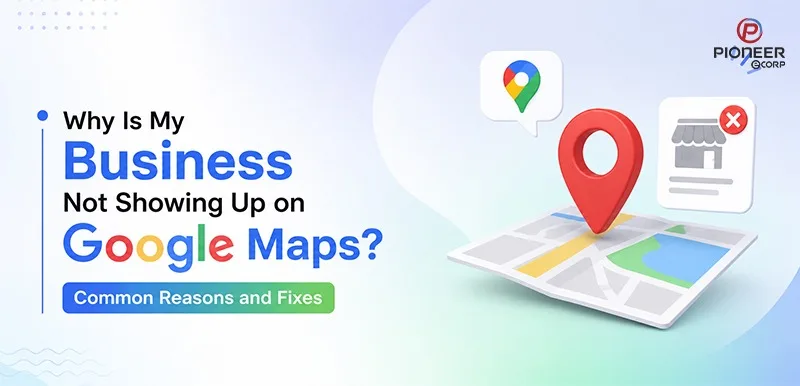
Why Is My Business Not Showing Up on Google Maps? Common Reasons and Fixes
Business Not Showing Up on Google Maps despite creating or verifying your Google Business Profile, you’re not alone. Many businesses experience this issue due to verification delays, incomplete profile information, local SEO issues, or Google’s ranking factors. The good news is that most of these problems can be identified and fixed with the right approach.
Whether you’ve recently created a new business profile or noticed your listing has disappeared from Google Maps, this guide explains the most common reasons behind the issue and the practical steps you can take to improve your visibility.
Why Isn't My Business Appearing on Google Maps?
Google Maps doesn’t automatically display every business profile. Before showing a business to users, Google evaluates several factors to ensure the listing is accurate, trustworthy, and relevant to local searches.
Some businesses don’t appear because they haven’t completed the verification process, while others struggle because their profiles aren’t fully optimized or fail to meet Google’s local ranking signals.
The first step is understanding whether your business is missing from Google Maps completely or simply ranking too low to be seen
How Google Decides Which Businesses Show on Google Maps
Google uses three primary factors when deciding which businesses appear in local search results.
Relevance
Relevance measures how closely your business profile matches what someone is searching for. Choosing the correct business category, writing an informative business description, and providing complete business details help Google understand your services.
Distance
Google considers how close your business is to the searcher’s location. If someone searches for “coffee shop near me,” businesses located closer to that person are generally given preference.
Prominence
Prominence refers to how well-known and trusted your business appears online. Reviews, website quality, citations, backlinks, and customer engagement all contribute to this factor.
Understanding these ranking signals helps explain why two similar businesses may appear differently in Google Maps.
Common Reasons Your Business Is Not Showing Up on Google Maps
1. Your Business Profile Hasn’t Been Verified
Verification confirms that your business is legitimate. Until Google completes the verification process, your profile may not appear publicly.
How to fix it:
- Complete the verification process.
- Follow Google’s instructions carefully.
- Wait for Google to confirm your verification.
2. Your Business Profile Is Too New
Newly created Google Business Profiles may take several days before appearing in search results. Google’s systems need time to review and process new listings.
How to fix it:
- Be patient.
- Avoid making unnecessary changes immediately after verification.
- Continue completing your business information while waiting.
3. Your Business Information Is Incomplete
Incomplete profiles reduce Google’s confidence in your listing. Missing phone numbers, website links, business hours, or service details can affect visibility.
How to fix it:
Complete every available section, including:
- Business category
- Phone number
- Website
- Business hours
- Services
- Products
- Photos
- Business description
A complete profile is more likely to appear in relevant local searches.
4. You’ve Selected the Wrong Business Category
Your primary business category tells Google exactly what your business does. Choosing an inaccurate category can prevent your business from appearing for relevant searches.
How to fix it:
Select the category that best represents your main service. Add secondary categories only when they accurately reflect additional services.
5. Your Business Was Suspended or Restricted
Google may suspend listings that violate its guidelines or contain misleading information. Suspended profiles won’t appear publicly until the issue is resolved.
Common reasons include:
- Keyword stuffing in the business name
- Fake addresses
- Duplicate listings
- Policy violations
How to fix it:
Review Google’s Business Profile guidelines, correct any issues, and submit an appeal if necessary.
6. Your Business Address Is Incorrect
Incorrect addresses or map pin locations confuse Google’s systems and customers alike.
How to fix it:
- Verify your street address.
- Ensure the map pin is placed correctly.
- Update any outdated location information.
Businesses serving customers at their location should also define accurate service areas.
7. Your Business Information Isn’t Consistent Across the Web
Google compares your business information with other trusted online sources. Differences in your business name, address, or phone number can reduce trust.
How to fix it:
Ensure your business details remain identical across:
- Website
- Social media profiles
- Online directories
- Local business listings
Consistency strengthens your local SEO.
8. Your Business Has Very Few Reviews
Customer reviews help Google understand that your business is active and trustworthy. Businesses with genuine reviews often perform better in local search.
How to fix it:
Encourage satisfied customers to leave honest reviews and respond professionally to every review, whether positive or negative.
9. Your Website Isn’t Supporting Your Google Business Profile
Although a Google Business Profile can exist without a website, having a well-optimized website strengthens your local search presence.
How to fix it:
Ensure your website includes:
- Local keywords
- Contact information
- Location pages (if applicable)
- Fast loading speed
- Mobile-friendly design
Your website and business profile should complement each other.
10. Duplicate Business Listings Exist
Multiple listings for the same business create confusion for both Google and customers.
How to fix it:
Search your business name on Google Maps and identify duplicate profiles. Request removal or merge duplicate listings where appropriate.
11. Your Profile Hasn’t Been Updated Recently
Inactive profiles may lose visibility over time compared to businesses that regularly update their information.
How to fix it:
Keep your profile active by:
- Uploading new photos
- Updating business hours
- Adding products or services
- Publishing Google Business updates
- Responding to customer questions
Fresh activity signals that your business is operational.
12. Local Competition Is Strong
Sometimes your business is visible but doesn’t rank highly because competitors have stronger local SEO signals.
They may have:
- More reviews
- Better website authority
- Stronger local backlinks
- More complete profiles
- Higher customer engagement
How to fix it:
Focus on improving your overall local SEO rather than looking for a quick fix. Consistent optimization produces better long-term results than temporary shortcuts.
Business Not Showing vs. Business Not Ranking: Know the Difference
Many business owners assume their Google Business Profile has disappeared when, in reality, it’s simply not ranking well for relevant searches. Understanding the difference can help you choose the right solution.
Your Business Is Not Showing
If your business doesn’t appear on Google Maps even when you search for its exact name, the problem is usually related to:
- Pending verification
- Profile suspension
- Duplicate listings
- Incorrect business information
- Google policy violations
These issues must be resolved before your profile becomes publicly visible.
Your Business Is Not Ranking
If your business appears when you search for its exact name but doesn’t show for keywords like “restaurant near me” or “plumber in Chennai,” your profile is visible but lacks strong local ranking signals.
This usually happens because of:
- Low review count
- Weak website SEO
- Limited local authority
- Poor profile optimization
- Strong local competition
Improving your Google Business Profile and local SEO strategy can gradually increase your rankings over time.
Google Maps Visibility Checklist
Before contacting Google Support, go through this quick checklist to identify potential issues.
✔ Your Google Business Profile is verified.
✔ Business name matches your real-world branding.
✔ Primary and secondary categories are accurate.
✔ Address, phone number, and website are correct.
✔ Business hours are up to date.
✔ Service areas are properly configured (if applicable).
✔ High-quality photos have been uploaded.
✔ Products or services are listed.
✔ Customers are leaving genuine reviews.
✔ You regularly respond to reviews and customer questions.
✔ Your website displays the same business information as your Google Business Profile.
✔ There are no duplicate listings for your business.
If you’ve completed every item on this checklist and your business still isn’t visible, the issue may require additional review from Google.
How Long Does It Take for a Business to Appear on Google Maps?
The time required depends on your situation.
- Newly created profiles may take a few days to appear after verification.
- Updated business information can take anywhere from a few hours to several days to reflect.
- Appeals for suspended profiles may take longer, depending on Google’s review process.
- Ranking improvements usually take time and depend on factors such as competition, profile optimization, customer reviews, and website authority.
If your profile has been verified but still isn’t showing after a reasonable period, review your profile for accuracy and ensure it complies with Google’s Business Profile guidelines.
Can Local SEO Improve Google Maps Visibility?
Yes. While creating a Google Business Profile is the first step, ongoing local SEO helps improve your visibility in Google Maps over time.
Some effective local SEO practices include:
- Keeping your business information consistent across the web.
- Optimizing your website with relevant local keywords.
- Earning genuine customer reviews.
- Building quality local backlinks.
- Updating your profile with new photos and business information regularly.
- Creating location-specific content that matches user searches.
These activities help Google understand that your business is active, relevant, and trustworthy.
Frequently Asked Questions
Why is my verified business still not showing on Google Maps?
Even after verification, your profile may take some time to become visible. Incomplete business information, policy violations, duplicate listings, or local ranking factors can delay your appearance on Google Maps.
Can I appear on Google Maps without a website?
Yes. A website is not mandatory to create a Google Business Profile. However, having a professional website improves credibility, strengthens local SEO, and increases your chances of ranking higher in Google Search and Maps.
How do I know if my Google Business Profile is suspended?
Sign in to your Google Business Profile account. If your profile has been suspended, Google will display a notification explaining that your listing is no longer visible and may provide steps to resolve the issue.
Does getting more Google reviews improve rankings?
Authentic customer reviews help build trust and can positively influence your local search visibility. Encourage genuine reviews and respond to them regularly to improve engagement.
What should I do if my business still doesn’t appear after trying all the fixes?
Review your profile for guideline violations, remove duplicate listings, verify that your business information is accurate, and contact Google Business Profile Support if the issue persists.
Conclusion
If your Business Not Showing Up on Google Maps, don’t worry—most visibility issues can be resolved with the right optimization strategy. From completing your Google Business Profile to maintaining accurate business information and improving your local SEO, every step plays a role in helping your business appear in relevant local searches.
At Pioneer Ecorp, we help businesses improve their Google Maps visibility through Google Business Profile optimization, local SEO, citation management, review strategies, and website optimization. Our team identifies the factors preventing your business from appearing on Google Maps and implements proven solutions to improve your local online presence.
Whether you’re launching a new business profile or trying to recover lost visibility, Pioneer Ecorp can help you build a stronger local presence and connect with more potential customers. Contact us today to optimize your Google Business Profile and grow your business through effective local SEO.
Why 90% of Businesses Fail Online (And How to Fix It)
In today’s competitive digital landscape, simply owning a website or creating a social media page isn’t enough to grow a business. Consumers search online before making purchasing decisions, compare brands, read reviews, and expect businesses to provide valuable information before they even make contact.
Yet, despite this shift in customer behavior, many businesses fail to generate quality leads, improve online visibility, or achieve consistent growth. The reason is simple—they lack a well-planned digital marketing strategy.
A professional Digital Marketing Agency in Chennai helps businesses bridge this gap by combining Search Engine Optimization (SEO), website optimization, content marketing, paid advertising, and social media strategies into one integrated approach. Instead of relying on guesswork, businesses benefit from proven techniques that attract the right audience and convert visitors into customers.
Whether you run a startup, manufacturing company, educational institution, healthcare clinic, or service-based business, investing in digital marketing is no longer optional—it’s essential for long-term success.
Why Do Most Businesses Fail Online?
Many businesses invest in attractive websites but overlook the factors that actually drive online success.
One of the biggest reasons is poor search visibility. If your website doesn’t appear when potential customers search for products or services, your competitors will receive the traffic instead. A Digital Marketing Agency in Chennai ensures your website is optimized to improve rankings and attract relevant visitors.
Another common issue is the absence of a clear digital strategy. Businesses often post randomly on social media, publish inconsistent content, or run advertisements without measurable goals. These disconnected efforts rarely produce meaningful results.
Website performance also plays a significant role. Slow-loading pages, poor mobile responsiveness, confusing navigation, and outdated designs create a poor user experience. Visitors who can’t quickly find the information they need are likely to leave your site without taking action.
Ignoring analytics is another costly mistake. Businesses that fail to monitor website traffic, user behavior, and campaign performance continue investing in strategies that don’t deliver results.
Without professional guidance, marketing budgets are often spent inefficiently, resulting in low returns and missed opportunities.
What Does a Digital Marketing Agency in Chennai Do?
A Digital Marketing Agency in Chennai helps businesses establish a strong online presence through a combination of strategic services designed to improve visibility, generate leads, and increase revenue.
Search Engine Optimization (SEO)
SEO improves your website’s position in search engine results by optimizing content, technical performance, and website structure. Better rankings lead to higher organic traffic and long-term business growth.
Content Marketing
Quality content builds trust while answering customer questions. Blogs, landing pages, service pages, and case studies not only educate visitors but also strengthen your website’s SEO performance.
Google Ads and PPC
Paid advertising delivers immediate visibility for businesses targeting specific products, services, or locations. Well-managed campaigns maximize return on investment by reaching users with high purchase intent.
Social Media Marketing
Social media platforms help businesses connect with their audience, build brand awareness, and drive engagement through valuable and consistent content.
Website Development and Optimization
Your website serves as your digital storefront. A professional agency ensures it loads quickly, functions smoothly across devices, and encourages visitors to take action through strategically placed calls-to-action.
How the Right Digital Marketing Agency in Chennai Can Transform Your Business Growth
Partnering with an experienced agency offers several long-term advantages.
Improved Search Rankings
SEO specialists continuously optimize your website using ethical practices that align with Google’s latest guidelines, helping your business rank for relevant keywords.
Better Lead Generation
Digital marketing focuses on attracting people who are actively searching for your products or services, increasing the likelihood of generating qualified leads.
Stronger Brand Awareness
Consistent branding across your website, social media platforms, and advertising campaigns builds credibility and makes your business more recognizable.
Higher Return on Investment
Rather than spending money on ineffective campaigns, agencies analyze data, optimize performance, and focus on strategies that generate measurable business results.
Time Savings
Managing SEO, advertising, content creation, and social media requires expertise and continuous effort. Outsourcing these activities allows business owners to focus on operations while marketing professionals handle growth.
Why Local Expertise Makes a Difference
Working with a Digital Marketing Agency in Chennai provides an important advantage because local agencies understand the regional market, customer behavior, and competitive landscape.
They know which keywords local customers search for, how to optimize your Google Business Profile, and how to create campaigns that resonate with audiences in Chennai and nearby areas.
Local SEO strategies help businesses appear in location-based searches, making it easier for nearby customers to discover your products and services.
A locally focused approach also enables businesses to respond quickly to market trends, seasonal demand, and changing customer preferences.
Common Digital Marketing Mistakes Businesses Should Avoid
Many businesses invest in digital marketing but fail to achieve the desired results because of avoidable mistakes. Understanding these challenges can help you build a stronger online presence.
Ignoring SEO
A website without SEO is unlikely to appear in Google’s search results. Without proper keyword optimization, technical improvements, and quality content, potential customers may never discover your business.
Publishing Low-Quality Content
Creating content only to fill a website rarely delivers results. Modern search engines reward helpful, informative, and original content that genuinely answers users’ questions and solves their problems.
Not Optimizing for Mobile Users
Most users browse websites on smartphones. If your website isn’t mobile-friendly or takes too long to load, visitors are likely to leave before exploring your services.
Inconsistent Online Presence
Using different branding, irregular posting schedules, or outdated information across platforms can reduce customer trust. Consistency helps build a professional image and strengthens brand recognition.
Not Tracking Performance
Without monitoring website traffic, keyword rankings, or conversions, it’s difficult to understand what’s working and what needs improvement. Data-driven decisions lead to better marketing outcomes.
Why Businesses Choose Pioneer Ecorp
Finding the right digital marketing partner is essential for long-term business growth. At Pioneer Ecorp, we focus on creating customized digital strategies that align with your business goals rather than using one-size-fits-all solutions.
As a trusted Digital Marketing Agency in Chennai, we help businesses improve their online visibility, generate qualified leads, and build a stronger digital presence through ethical marketing practices and measurable strategies.
Our core services include:
- Search Engine Optimization (SEO)
- Local SEO
- Google Ads Management
- Social Media Marketing
- Website Design & Development
- Website Maintenance
- Content Marketing
- Technical SEO Audits
- Lead Generation Solutions
Every campaign is built around your target audience, industry competition, and business objectives. We continuously analyze performance, refine strategies, and focus on sustainable growth that delivers measurable results.
Whether you’re a startup, educational institution, healthcare provider, manufacturer, or established business, Pioneer Ecorp provides digital marketing solutions designed to help you compete confidently in today’s digital marketplace.
People Also Ask (PAA)
Conclusion
The digital marketplace is evolving rapidly, and businesses that fail to adapt risk falling behind their competitors. Simply having a website or social media presence is no longer enough to attract customers or generate consistent growth.
Partnering with a professional Digital Marketing Agency in Chennai gives your business access to the expertise, tools, and strategies needed to improve online visibility, strengthen brand credibility, and convert potential customers into loyal clients. From SEO and content marketing to paid advertising and website optimization, every aspect of digital marketing contributes to sustainable business success.
If you’re looking to expand your reach, increase qualified leads, and achieve long-term growth, working with an experienced team can make a significant difference. Pioneer Ecorp combines industry knowledge, data-driven strategies, and customer-focused solutions to help businesses succeed in an increasingly competitive online environment.
Ready to Grow Your Business?
Whether you’re launching a new business or looking to improve your existing online presence, Pioneer Ecorp is here to help. Contact our team today to discover how our tailored digital marketing solutions can help your business reach the right audience, generate more leads, and achieve measurable results.
Beyond Google Ads: The New Paid Advertising Strategies Chennai Companies Will Use in 2026
Let’s be completely honest for a second. If you are running a business in Chennai right now, you’ve probably looked at your recent digital marketing reports with a deep sense of frustration. You are likely paying significantly more for leads than you did just two years ago. To make matters worse, the actual quality of those expensive leads seems to be dropping. You aren’t alone. From the fast-paced tech corridors of OMR to the crowded retail hubs of T. Nagar, the competition for consumer attention is fiercer than ever. The old playbook is broken. Throwing a few thousand rupees at a basic Google Search campaign and waiting for the phone to ring simply doesn’t work anymore. Consumer behavior in Chennai has evolved. To survive and scale in 2026, you need a radical shift in how you approach paid ads in Chennai.
The Trap: Why Basic Google Ads Are Bleeding Your Budget
A few years ago, setting up a Google Ads campaign in Chennai felt almost like a cheat code for business growth. You picked some keywords, wrote three lines of text, and watched the high-intent traffic roll in.Today, that same approach is burning through marketing budgets at an alarming rate.
Here is why your costs are rising:
Hyper-Competition: Every single one of your competitors is bidding on the exact same “bottom-of-the-funnel” keywords. Bidding Wars: If ten different developers in Velachery are all bidding on “buy 3BHK flat in Velachery,” Google simply raises the price for everyone. The winner isn’t the best builder; it’s the one willing to lose the most money on the initial click. AI Search Overviews: Artificial intelligence has changed how people use search engines. Many users now get answers directly from AI summaries at the top of the page, meaning they never scroll down to click your traditional search ad. If your entire strategy relies on catching people at the very last second of their buying journey, you are missing out on 90% of your potential market. Digital marketing agencies in Chennai must pivot. You have to capture user intent much earlier, creating demand before they ever type a search query into Google.
Key Pillars of Social Media Marketing in Chennai Today
To succeed in this highly competitive digital era, your marketing strategy must be localized, video-first, and friction-free.
Hyper-Local Vernacular Content (Tamil Reels & Ads)
While corporate meetings frequently default to English, speaking directly to your audience in their native Tamil is the ultimate catalyst for driving actual revenue across the state. Developing region-specific messaging creates an instant sense of familiarity, breaking down the traditional barriers between a brand and a buyer.
When modern consumers encounter an Instagram Reel or a sponsored post in their mother tongue, their buying hesitation drops significantly. The interaction feels less like a sterile sales pitch and more like a genuine recommendation from a local friend. Consistently, performance data reveals that utilizing regional dialects for video voiceovers and ad copy drastically lowers your overall customer acquisition costs compared to running generalized, broad-market campaigns.
Instagram Shopping and Direct DMs
Instagram has transformed into a massive virtual mall. Features like Instagram Shop, shoppable product tags, and native checkout allow users to buy an item the second they see it in a Reel or Story.
Furthermore, Direct Messages (DMs) have become the modern sales counter. Fast, personalized responses to DMs significantly boost conversion rates.
When a user replies to an Instagram Story asking for the price, an immediate reply containing a payment link can turn a casual browser into a paying customer in seconds.
Video-First Discovery and Live Commerce
Static images are no longer enough to convince a highly educated consumer base. Today, video-first selling via YouTube Shorts, Instagram Reels, and Facebook Live is dominating the algorithm.
Live commerce allows store owners to showcase products in real-time. A boutique owner in Nungambakkam can host a Friday evening live stream, displaying the latest Kanjeevaram silk sarees.
Viewers can ask questions about the fabric in the comments and instantly click a pinned link to purchase, replicating the in-store experience perfectly.
4 Paid Ad Strategies Actually Working in Chennai Right Now
To dominate the local market today, you have to meet your customers where their attention actually is. Based on actual data from our highest-performing clients at Pioneer Ecorp, here are the four strategies moving the needle in 2026.
1. The WhatsApp Commerce Revolution (Your New Landing Page)
Let’s talk about how people in Tamil Nadu actually communicate. They don’t want to fill out a clunky 10-field contact form on a slow-loading website. They want instant answers, and they want them on WhatsApp. Click-to-WhatsApp ads on Meta (Facebook and Instagram) are currently generating the highest conversion rates we have ever seen.Instead of sending ad traffic to a traditional landing page, these ads open a direct WhatsApp chat with your business.The user clicks the ad. Their WhatsApp instantly opens with a pre-filled message (e.g., “Hi, I want to know more about your services”).The moment they hit send, you have their verified phone number. This strategy completely eliminates “form friction.” From there, you can use automated chatbots to qualify the lead, and a human sales rep can step in to close the deal.
2. Hyper-Local Vernacular Video Ads
If you want to build deep trust with a Chennai audience, you have to speak their language—literally. Restricting your promotional messaging solely to English creates an artificial ceiling on your market penetration. Vernacular marketing is no longer a “nice-to-have”; it is the backbone of successful paid advertising. Video consumption across platforms like YouTube Shorts, Instagram Reels, and Connected TV (CTV) has exploded.Industry Secret: Running high-quality, pure Tamil or casual “Tanglish” video ads on streaming platforms like Hotstar during major events allows for massive, highly engaged reach. These hyper-local ads create an emotional resonance that generic corporate English ads completely miss. People buy from brands they feel understand their specific cultural context.
3. AI-Driven Performance Max (Letting the Machine Do the Work) Google’s Performance Max (PMax) campaigns have officially taken over as the gold standard for lead generation and eCommerce. If you aren’t using PMax, you are fighting a modern war with outdated tools.Unlike traditional search ads where you manually guess which keywords will work, PMax uses Google’s advanced AI to serve your ads across its entire network simultaneously (Search, Display, YouTube, Gmail, and Google Maps). The AI analyzes millions of real-time data points to find users who are statistically most likely to convert right now.
To win with PMax, you must provide:
Crystal-clear lifestyle images. Highly engaging short-form video content. Strong “audience signals” (like a list of your past buyers) to point the AI in the right direction.
4. Zero-Party Data & Privacy-First Retargeting
The era of tracking users endlessly across the internet using third-party cookies is effectively over. Privacy regulations are stricter, and platforms have made it incredibly hard to track user behavior. To run profitable retargeting ads in a privacy-first world, you must rely on data you actually own:
Your CRM lists.Your email subscribers. Your past purchasers. The phone numbers collected via WhatsApp ads. By securely uploading these encrypted lists directly into platforms like Meta or Google, you can run specific, high-ROI retargeting ads to people who already know your brand.
How Pioneer Ecorp Builds Predictable Growth Engines
At Pioneer Ecorp, we do not view ourselves simply as an agency that “runs ads.”
We are a revenue growth partner. Executing profitable paid ads in Chennai requires a deep, nuanced understanding of the local Tamil Nadu market ecosystem.
We focus entirely on the metrics that pay your bills: Cost Per Acquisition (CPA), lead-to-sale ratio, and ultimate Return on Ad Spend (ROAS). Vanity metrics like “impressions” and “clicks” mean absolutely nothing if they don’t result in closed revenue. Our approachis rooted in strict Google EEAT (Experience, Expertise, Authoritativeness, Trustworthiness) principles. We combine scroll-stopping creative design, conversion-rate-optimized landing pages, and ruthless A/B testing to outsmart your local competition.
People Also Ask (PAA)
Final Thoughts: Future-Proofing Your Brand
The digital marketing landscape is shifting at breakneck speed.
The strategies that helped you grow in 2023 will actively lose you money in 2026.The businesses that dominate Chennai over the next decade will be the ones that adapt. They will embrace WhatsApp funnels, invest heavily in vernacular video content, and let AI-driven campaigns do the heavy lifting. Running highly profitable paid ads in Chennai requires continuous testing, sharp creative strategy, and a partner who actually understands the local buyer psychology.
Are you ready to stop buying expensive clicks and start acquiring actual customers? Pioneer Ecorp is here to audit your current setup, map out a custom digital growth strategy, and help you scale predictably.
Why Is My Business Not Getting Leads Online Even After Investing in SEO and Digital Marketing?
Your business is not getting leads — and you are not sure why. You have invested in SEO, your website is up and running, you are posting on social media, and maybe you have even run a few Google Ads. But the enquiries are not coming in the way you expected. If this is where you are right now, you are not alone — and more importantly, this is fixable.
We manage digital marketing for industrial and B2B businesses across Chennai and Tamil Nadu. And this is the single most common frustration we hear — from power rental companies, equipment dealers, and service businesses who have already spent money on digital but are not seeing results.
The good news: a business not getting leads despite being online almost always has clear, identifiable gaps. This blog walks through each one — with real-world examples from businesses in Chennai — so you can audit your own situation and take action today.
1. Your Website Looks Professional But Does Not Convert
A good-looking website and a lead-generating website are two completely different things. Most businesses invest in website development to get online — which is the right first step. But then the website sits there like a digital brochure, with no clear path to enquiry.
Consider this real scenario: an industrial power rental company with 25+ years of experience, a solid client list including MRF and Amazon, and pages for every product from diesel generators to air compressors and load banks — had a website with no WhatsApp button, no clickable phone number in the header, and a contact form buried two clicks deep. Every visitor who landed on a service page had to work to reach out. Most did not bother.
- A website that actively generates leads must have:
Website Conversion Must-Haves for B2B and Industrial Businesses
- WhatsApp Click-to-Chat Button: Keep a visible WhatsApp button fixed on every page for instant enquiries.
- Clickable Phone Number: Ensure visitors can call directly from both desktop and mobile devices.
- Simple Homepage Enquiry Form: Ask only for name, phone number, and requirement to maximize conversions.
- Clear Service Area: Mention your coverage area prominently, such as Chennai, Tamil Nadu, or Pan India.
- Trust Signals Above the Fold: Display client logos, testimonials, or certifications without requiring users to scroll.
- Fast Loading Speed: Keep page load times under 3 seconds to reduce visitor drop-offs and improve conversions.
2. Your SEO Is Bringing Visitors Who Will Never Buy
This is one of the most common reasons a business is not getting leads from SEO. Your rankings look good on paper, but the traffic is made up of people who are researching — not people who are ready to buy or rent.
Here is a concrete example: an industrial equipment company in Chennai ranking well for keywords like “types of air compressors” and “how forklifts work” was getting steady traffic — but the visitors were engineering students, not procurement managers. The moment the SEO focus shifted to terms like “ELGI air compressor dealers in Chennai” and “forklift rental for warehouse in Tamil Nadu,” the enquiries started coming in.
Traffic Keywords vs. Lead Keywords — Know the Difference
- Traffic: “Types of forklifts for warehouse” → Lead: “Electric forklift dealers in Chennai”
- Traffic: “How diesel generators work” → Lead: “Diesel generator rental in Ambattur Industrial Estate”
- Traffic: “Air compressor maintenance tips” → Lead: “ELGI screw compressor price in Chennai”
- Traffic: “What is a load bank” → Lead: “Rental load banks for generator testing Chennai”
3. Social Media Is Creating Brand Awareness, Not Enquiries
Social media marketing is one of the most misunderstood investments among B2B and industrial businesses in Tamil Nadu. The common mistake is posting product photos and company updates — and then wondering why the phone is not ringing.
For businesses like power equipment rental companies or industrial equipment dealers, social media marketing works when it is targeted at the right decision-makers with the right offer. A post about “diesel generator rental for events in Chennai” with a direct WhatsApp link will outperform ten generic product photos every single time.
Social Media Marketing That Actually Generates B2B Leads
- Meta Lead Ads with pre-filled forms — ideal for rental enquiries and dealer quotation requests.
- WhatsApp Click-to-Chat ads on Facebook and Instagram — one of the best-performing formats for industrial SMBs.
- Video posts showing your equipment in action at client sites — builds trust faster than generic promotional creatives.
- Retargeting ads for website visitors from the last 30 days — helps recover the 97% of visitors who leave without enquiring.
- Industry-specific audience targeting — procurement managers, plant heads, warehouse supervisors, and decision-makers across Tamil Nadu.
4. Your Digital Channels Are Not Connected Into a Funnel
Most businesses run SEO, social media, and a website as three separate activities. The result is that a visitor who finds you through Google but does not enquire immediately is gone forever — because there is no retargeting, no follow-up touchpoint, no connected funnel bringing them back.
A power rental or industrial equipment business in Chennai typically needs 3 to 5 touchpoints before a buyer picks up the phone. A connected funnel ensures those touchpoints happen automatically, without the business owner manually chasing anyone.
A Connected Lead Funnel for Industrial and B2B Businesses
- Step 1: Buyer searches “diesel generator rental Chennai” and lands on your SEO page.
- Step 2: The visitor does not enquire immediately, but Google Tag Manager records the visit.
- Step 3: The visitor sees your retargeting ad on Facebook or Instagram the next day.
- Step 4: They click the ad and land on a focused landing page with a short form and WhatsApp button.
- Step 5: They submit an enquiry and receive an instant WhatsApp confirmation while your team follows up quickly.
5. Your Google Business Profile Is Inactive or Incomplete
For businesses operating out of specific locations in Chennai or Tamil Nadu, Google Maps is often where the first buyer-intent search happens. “Generator rental near me,” “air compressor dealers in Chennai,” “forklift supplier in Ayanambakkam” — these are high-intent searches that your Google Business Profile should be capturing.
The reality is that most industrial and equipment businesses have a GBP listing that was set up once and never touched again. No weekly posts, no updated photos, no responses to reviews. Google deprioritises inactive listings — and a competitor with a more active profile will rank above you on the map, even if you have been in business longer.
Google Business Profile Checklist for Industrial Businesses
- Choose the right business category — use “Generator Dealer”, “Industrial Equipment Supplier”, or the most relevant primary category.
- List all products and services — include descriptions, specifications, and pricing where possible.
- Collect and respond to reviews — aim for at least 10 quality reviews and reply to every one.
- Publish weekly Google Posts — share rental offers, new arrivals, project updates, and industry news.
- Update photos regularly — showcase equipment, facilities, team members, and completed installations.
- Set accurate service areas — include all cities, districts, and industrial zones you actively serve.
6. Enquiries Are Coming In — But Getting Lost Before Follow-Up
Here is the gap that no digital marketing agency will tell you about: sometimes the lead generation is working, but the follow-up process is broken. Enquiries are coming in through WhatsApp, the website form, or missed calls — but nobody is picking them up fast enough.
In the industrial and equipment sector, buyers are often comparing 3 to 4 vendors at the same time. The first company to respond with a price or call-back gets the deal. A procurement manager looking for a 200 kVA generator rental in Chennai on a Tuesday afternoon will not wait until Thursday morning for your call.
Lead Response Process That Prevents Drop-Off
- Set up an instant WhatsApp auto-reply — acknowledge every enquiry within 30 seconds and set clear expectations for a callback.
- Implement a missed-call callback rule — return every missed call within 10 minutes.
- Assign a dedicated enquiry owner — one person should manage all website, WhatsApp, and phone enquiries during business hours.
- Follow a structured follow-up sequence — Call at Hour 1, WhatsApp at Hour 24, and follow up again at Hour 72.
- Track every lead in one place — record Lead Name, Source, Date, Status, and Next Action in a CRM or spreadsheet.
What You Should Do Right Now
If your business is not getting leads despite ongoing digital marketing investment, do not increase the budget yet. Start with an honest audit across these six areas:
Quick Lead Generation Audit Checklist
- Website Conversion: Is your website equipped with a WhatsApp button, clickable phone number, and a simple homepage enquiry form?
- SEO Strategy: Are your target keywords buyer-intent and location-specific rather than purely informational?
- Social Media Marketing: Are you running lead generation campaigns instead of only posting brand awareness content?
- Retargeting Funnel: Are your website, social media, and advertising channels connected into a lead nurturing funnel?
- Google Business Profile: Is your profile active with recent posts, updated photos, and customer engagement?
- Lead Follow-Up: Can your team respond to new enquiries within 30 minutes or less?
Fixing even two or three of these gaps consistently produces a visible change in enquiries within 30 to 60 days — without increasing your ad spend.
We have worked with B2B and industrial businesses in Chennai to go from zero online enquiries to 30 to 50 qualified leads per month by addressing exactly these issues. Companies with decades of experience and strong reputations — like power rental providers serving enterprise clients, or equipment manufacturers with 1,000+ installations across India — often have the credibility, but the digital channel is simply not set up to capture demand that is already there.
The problem is never a lack of investment. It is almost always a matter of strategy, structure, and follow-through.
SEO Trends for 2026: How Search and AI Are Changing
If you run a business and search has felt different lately, you’re not imagining it. SEO Trends for 2026 are reshaping how people find businesses online, and the shift is bigger than another Google algorithm update.
Search engines no longer just list links. They read your content, understand it, and sometimes answer the question before anyone visits your website. For business owners who depend on digital marketing, social media marketing, and lead generation to bring in customers, this changes what “ranking well” actually means.
This guide breaks down what’s really changing in search this year, why it matters for your business, and what you can do about it, without the jargon.
Why SEO Trends for 2026 Look So Different This Year
For nearly two decades, SEO followed a familiar pattern: research keywords, optimize a page, build some backlinks, and wait for rankings to climb. That formula isn’t dead, but it’s no longer enough on its own.
Today, AI systems read and summarize web content before a user ever clicks a result. Someone might ask a question and get a complete answer directly on the search page, generated from several websites, including possibly yours. That’s a win if your content gets cited. It’s a missed opportunity if it doesn’t.
Here’s what’s driving the shift:
- AI Overviews and AI-generated answers now appear above traditional search results for many queries.
- Search has spread beyond Google, into YouTube, social platforms, and AI chat tools where people now ask questions directly.
- Zero-click searches mean people get answers without visiting any website at all.
- Trust and real expertise matter more than keyword density ever did.
None of this means SEO is going away. It means the businesses that adapt their digital marketing approach now will have a real head start over competitors who keep doing things the old way.
AI Search Is Changing How Customers Find You
The biggest story in SEO Trends for 2026 is artificial intelligence. AI Overviews, chatbots, and conversational assistants are becoming a normal part of how people search, not a niche behavior.
Instead of typing two or three keywords, people now ask full questions, the way they’d ask a friend. “Best digital marketing agency for small businesses near me” gets a very different kind of response than it would have five years ago. Search engines try to answer that question directly, pulling from content that’s clear, well-organized, and genuinely useful.
What this means for your business
If your website content is vague, packed with keywords, or written purely to rank rather than to help, AI systems are far less likely to feature it. Content that clearly explains a topic, answers real questions, and is organized with proper headings has a much better shot at being picked up and cited.
- Structure your content with clear headings so both readers and AI can scan it quickly.
- Answer the main question early in the page, then expand with details and examples.
- Avoid stuffing keywords; write the way you’d explain something to a customer in person.
This is also where strong digital marketing fundamentals still apply. A well-optimized website, clear messaging, and helpful content work hand in hand with whatever AI search throws at us next.
Search Now Happens Everywhere, Not Just on Google
One of the more practical SEO Trends for 2026 is that search has stopped being a single-platform activity. People discover businesses on Instagram, YouTube, LinkedIn, and AI apps just as often as they do on Google.
A potential customer might see your brand in a short video, look you up on social media, then finally search your name on Google before reaching out. Every one of those touchpoints needs to tell a consistent story about who you are and what you offer.
Why social media marketing now overlaps with SEO
Social media marketing isn’t separate from search anymore, it feeds it. Search engines and AI tools increasingly factor in how people talk about your brand online: shares, comments, reviews, and mentions all add up to signals of trust.
- Keep your business information (name, services, location) consistent across your website, Google Business Profile, and social channels.
- Encourage genuine customer reviews; they’re now a meaningful trust signal for both search engines and AI tools.
- Post content on social platforms that reflects the same expertise and tone as your website.
Businesses that show up consistently across these channels build the kind of presence that search engines and AI assistants are now built to recognize and trust.
Zero-Click Search: Why Visibility Now Matters More Than Clicks
A growing share of searches end without a click. The user gets their answer directly in an AI Overview, a featured snippet, or a knowledge panel, and moves on. This is a major piece of the SEO Trends for 2026 conversation, because it changes how you should measure success.
Website traffic is still important, but it’s no longer the whole picture. Being mentioned or cited as a source inside an AI-generated answer builds awareness and trust, even if that particular search doesn’t result in a visit. Over time, that visibility brings people back to your brand when they’re ready to act.
How to stay visible even in a zero-click world
- Add clear FAQs to your pages that directly answer common customer questions.
- Use structured, scannable formatting: short paragraphs, headers, and bullet points.
- Track brand mentions and citations, not just clicks, when reviewing your marketing performance.
This is also a reminder that lead generation strategies need more than one channel feeding them. Relying on search traffic alone leaves you exposed; a mix of SEO, social media marketing, and paid efforts keeps your pipeline steady.
Trust and Real Experience Are Becoming Ranking Factors
Search engines and AI platforms are placing far more weight on genuine expertise and credibility, often summarized as E-E-A-T (Experience, Expertise, Authoritativeness, Trustworthiness). Keyword placement alone won’t carry a page the way it used to.
In practice, this means content written by someone with real, hands-on experience in a topic tends to perform better than generic, surface-level writing. Clear author information, honest case studies, and original insights all help establish that your business knows what it’s talking about.
- Add author bios or business credentials to blog content where relevant.
- Share real examples, case studies, or results instead of generic claims
- Keep information accurate and up to date; outdated or inconsistent details quietly erode trust.
For a business in any competitive local market, this trust-first approach pays off well beyond SEO. It strengthens how customers perceive your brand across every digital marketing channel you use.
Practical Steps to Get Ahead of SEO Trends for 2026
Understanding these shifts is one thing. Acting on them is what actually moves the needle. Here’s a practical starting point for business owners who want their digital marketing to keep working in this new search landscape.
1. Build content around topics, not just keywords
Instead of writing one page per keyword, create a cluster of related content around a topic your customers care about. This signals depth and authority, and it naturally supports better lead generation by capturing people at different stages of their search.
2. Write for people first, structure for AI second
Lead with a direct, clear answer, then explain further with examples and context. This approach works well for human readers and happens to be exactly what AI systems look for when selecting content to cite.
3. Strengthen your local and social presence
Keep your Google Business Profile accurate, gather authentic reviews, and stay active on the social platforms where your customers actually spend time. Local relevance and social proof are carrying more SEO weight than ever.
4. Diversify your content formats
Video, short guides, infographics, and FAQs all give you more chances to appear across different types of search results. A single blog post is a starting point, not the finish line.
5. Track visibility, not just rankings
Keep an eye on brand mentions, AI citations, and engagement quality alongside traditional rankings. A complete view of your search performance gives you a clearer read on what’s actually working.
Final Thoughts
SEO Trends for 2026 boil down to one core idea: search engines and AI tools now reward businesses that are genuinely helpful, clearly organized, and consistently visible across channels. Keyword tricks and shortcuts are losing ground to real expertise and trust.
The good news is that this shift favors businesses willing to put in honest, consistent effort. By combining solid SEO fundamentals with smart digital marketing, active social media marketing, and a steady lead generation strategy, you put your business in a strong position, no matter how search continues to evolve.
Social Commerce Revolution 2026: How Social Media Marketing in Chennai Is Driving Direct Sales
The digital landscape in Tamil Nadu is experiencing a massive shift in 2026. The days when businesses solely relied on traditional websites or third-party marketplaces to generate online sales are rapidly fading.
Today, the modern consumer wants a seamless, immediate shopping experience right where they spend most of their time: on social media apps.
For local businesses and regional brands, mastering social media marketing in Chennai has evolved from simply posting aesthetically pleasing photos to building highly optimized, direct-sales engines. This transition is known as the social commerce revolution.
Whether you are a boutique in T. Nagar, an emerging D2C wellness brand in Adyar, or an established enterprise, integrating content with native shopping features is no longer optional. At Pioneer E Corp, we are seeing firsthand how brands that adapt to this localized social selling ecosystem are bypassing competitors and achieving unprecedented conversion rates.
Ready to Grow Your Social Presence?
Build stronger engagement and drive more sales with a strategic social media marketing approach.
The 2026 Shift: Why Social Commerce Is Taking Over Chennai
Social commerce is the process of selling products directly within social media platforms. Instead of redirecting a user to a slow-loading external website, the entire buyer journey—from discovery to checkout—happens natively inside apps like Instagram, Facebook, and WhatsApp.
The Decline of Traditional Marketplaces
Chennai consumers in 2026 are increasingly bypassing giant marketplaces like Amazon and Flipkart. Instead, they are choosing to go brand-direct.
This shift is particularly visible in categories like ethnic wear, FMCG, artisan goods, and customized jewelry. Shoppers prefer the personalized, direct connection they get from buying straight from a brand’s social media page.
Marketplace fees and intense competition make it difficult for local sellers to stand out. Social commerce removes the middleman, allowing Chennai businesses to build direct relationships, retain higher profit margins, and own their customer data.
The Rise of WhatsApp Commerce in Tamil Nadu
In 2026, WhatsApp is no longer just a messaging app; it is the ultimate storefront. The cultural preference for conversational selling in Chennai translates perfectly to digital interactions.
Just as a shopper haggles and asks for recommendations in Pondy Bazaar, they now do the same via WhatsApp Business API. Open rates for WhatsApp in India currently exceed 70%, completely eclipsing traditional email marketing.
Brands are closing sales through automated order confirmations, conversational product discovery, and instant UPI payment links directly inside the chat window.
Key Pillars of Social Media Marketing in Chennai Today
To succeed in this highly competitive digital era, your marketing strategy must be localized, video-first, and friction-free.
Hyper-Local Vernacular Content (Tamil Reels & Ads)
While corporate meetings frequently default to English, speaking directly to your audience in their native Tamil is the ultimate catalyst for driving actual revenue across the state. Developing region-specific messaging creates an instant sense of familiarity, breaking down the traditional barriers between a brand and a buyer.
When modern consumers encounter an Instagram Reel or a sponsored post in their mother tongue, their buying hesitation drops significantly. The interaction feels less like a sterile sales pitch and more like a genuine recommendation from a local friend. Consistently, performance data reveals that utilizing regional dialects for video voiceovers and ad copy drastically lowers your overall customer acquisition costs compared to running generalized, broad-market campaigns.
Instagram Shopping and Direct DMs
Instagram has transformed into a massive virtual mall. Features like Instagram Shop, shoppable product tags, and native checkout allow users to buy an item the second they see it in a Reel or Story.
Furthermore, Direct Messages (DMs) have become the modern sales counter. Fast, personalized responses to DMs significantly boost conversion rates.
When a user replies to an Instagram Story asking for the price, an immediate reply containing a payment link can turn a casual browser into a paying customer in seconds.
Video-First Discovery and Live Commerce
Static images are no longer enough to convince a highly educated consumer base. Today, video-first selling via YouTube Shorts, Instagram Reels, and Facebook Live is dominating the algorithm.
Live commerce allows store owners to showcase products in real-time. A boutique owner in Nungambakkam can host a Friday evening live stream, displaying the latest Kanjeevaram silk sarees.
Viewers can ask questions about the fabric in the comments and instantly click a pinned link to purchase, replicating the in-store experience perfectly.
Actionable Strategies to Drive Direct Sales
If you want to capitalize on social commerce in 2026, you need a robust, data-driven approach. Here are the most effective strategies to implement.
Optimize Your Digital Storefronts
Your social media profile is your new homepage. Ensure your bio is crisp, clearly stating what you sell and where you are located.
Integrate your product catalog directly with Meta (Facebook and Instagram). Ensure every product has high-quality images, clear pricing, and detailed descriptions.
Reduce the steps required to buy. The fewer clicks it takes from seeing a product to completing a UPI payment, the higher your sales volume will be.
Leverage Micro-Influencers in Namma Chennai
Massive celebrity endorsements are expensive and often lack authenticity. Instead, partner with local micro-influencers and creators based in Chennai.
These creators have highly engaged, niche audiences who trust their recommendations implicitly. A review from a well-known local food blogger or fashion creator carries immense weight.
Set up affiliate partnerships where creators earn a commission for direct sales generated through their custom promo codes or shoppable links.
Implement AI-Powered Quick Responses
In the era of quick commerce, patience is practically non-existent. If a customer messages your page at 11 PM asking about a product’s size, they expect an answer immediately.
Integrating AI chatbots and automated workflows into your Instagram DMs and WhatsApp Business account ensures you never miss a lead.
Set up automated flows for frequently asked questions, abandoned cart reminders, and seamless hand-offs to human agents when complex queries arise.
How Pioneer E Corp Elevates Your Social Commerce Game
Navigating the complexities of social algorithms, Meta ad manager, and WhatsApp API integrations requires specialized expertise. That is where a premium digital marketing agency steps in.
At Pioneer E Corp, we understand the unique heartbeat of the Chennai market. We don’t just run ads; we build end-to-end digital sales ecosystems.
Our approach to social media marketing in Chennai focuses purely on Return on Investment (ROI). We craft hyper-targeted campaigns that reach your exact demographic, whether they are IT professionals in OMR or college students in Anna Nagar.
By blending culturally relevant creative design with aggressive performance marketing, Pioneer E Corp ensures your brand stands out in a crowded feed and drives measurable, direct revenue.
People Also Ask (PAA)
Conclusion
The social commerce revolution of 2026 has completely rewritten the rules of retail and digital sales. Consumers are no longer just browsing social media to pass the time; they are there to discover, engage, and buy.
For businesses in Tamil Nadu, mastering social media marketing in Chennai requires a shift from passive posting to active, localized selling. By embracing WhatsApp commerce, leveraging Tamil vernacular content, and optimizing Instagram storefronts, brands can unlock unprecedented growth.
Refuse to let rival companies hijack the digital spotlight and claim the buyers who should belong to you. Partner with experts who understand the intersection of local culture and global digital trends.
Ready to transform your social media followers into loyal, paying customers? Connect with Pioneer E Corp today, and let us build a direct-sales powerhouse for your brand.
Ready to Take Your Digital Marketing to the Next Level?
Connect with our team and create a digital marketing strategy that supports your business growth.
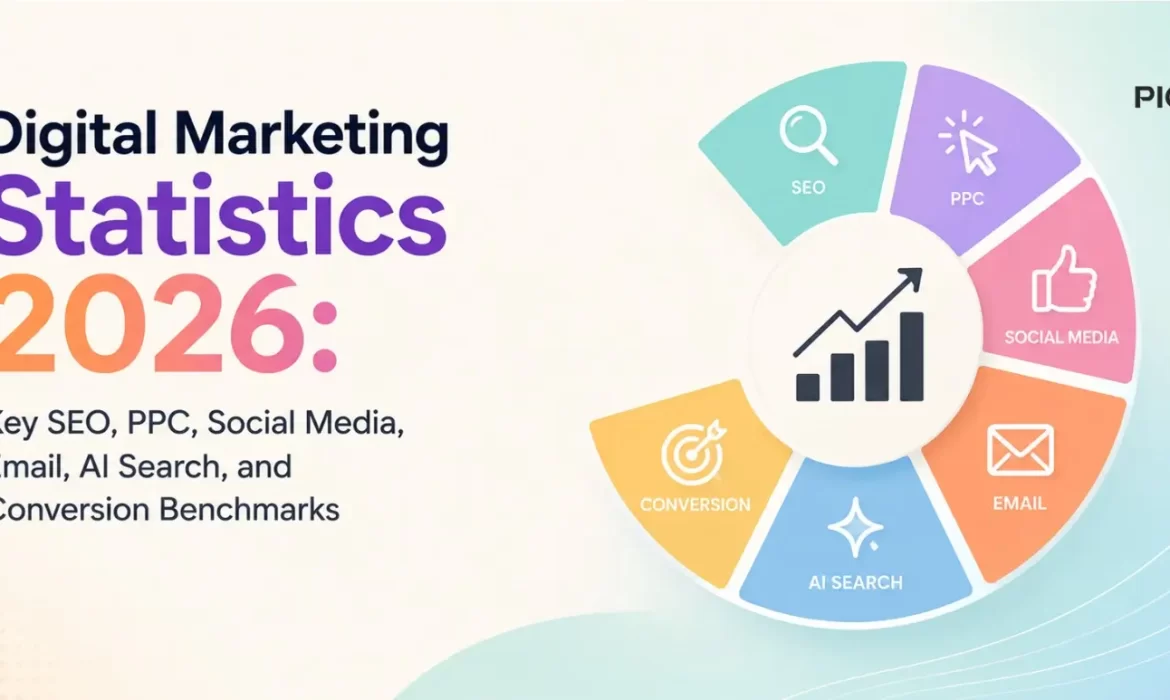
Digital Marketing Statistics 2026: Key SEO, PPC, Social Media, Email, AI Search, and Conversion Benchmarks
If you’re planning your marketing strategy for the year ahead, understanding the latest Digital Marketing Statistics 2026 is essential. These figures provide a clear picture of current industry trends, highlight the channels delivering the best results, and show where businesses are investing their marketing budgets.
From social media marketing and content marketing to AI-powered search and lead generation, every channel continues to evolve. This guide highlights the most important benchmarks to help business owners and marketers make informed decisions.
SEO Statistics 2026: Organic Search Is Still the Foundation
Search engine optimisation remains one of the most effective marketing channels available to businesses. Organic search continues to generate a large share of website traffic, and companies that invest in SEO consistently benefit from long-term growth.
| Statistic | Value |
|---|---|
| Percentage of all online experiences that begin with a search engine query | 68% |
| Percentage of website traffic across industries that comes from organic search | 53% |
| Percentage of searchers who click on results from the second page of Google | 0.63% |
| Higher close rate for SEO leads compared to outbound leads | 3.5× |
Key SEO priorities for 2026:
- Core Web Vitals remain a confirmed Google ranking factor. Page speed and user experience continue to influence search visibility.
- AI Overviews (formerly SGE) are now appearing on more search queries, making it important for content to answer questions clearly and directly.
- E-E-A-T signals (Experience, Expertise, Authoritativeness, and Trustworthiness) continue to play a major role in competitive industries.
- Long-tail keywords account for a significant share of search traffic and remain valuable for lead generation campaigns.
PPC Statistics 2026: Paid Search Delivers Measurable Returns
Pay-per-click advertising remains an effective way to generate traffic and leads quickly. The latest Digital Marketing Statistics 2026 indicate that businesses earn an average of ₹2 for every ₹1 spent on Google Ads, making PPC one of the easiest channels to measure and optimise.
- Google controls 92% of global search ad market share, making it the leading PPC platform for most industries.
- The average click-through rate (CTR) for Google search ads is 6.42%, significantly higher than display advertising.
- Retargeting ads are 70% more likely to convert visitors who have already interacted with your website.
- Video ads on YouTube generate 2× higher purchase intent than traditional TV advertising, according to platform data.
For businesses working with limited budgets, AI-powered bidding strategies such as Target CPA and Maximise Conversions have become standard tools for improving campaign performance and reducing unnecessary spend.
Social Media Marketing Statistics 2026: Reach, Engagement, and ROI
Social media marketing has evolved beyond brand awareness. Today, it plays an important role in customer engagement, lead generation, and sales growth. With more than 5.2 billion active social media users worldwide, businesses have significant opportunities to connect with their audiences.
- Instagram delivers the highest engagement rate for branded content at 0.70%, compared to Facebook’s 0.15%.
- Short-form video content, including Reels, Shorts, and TikTok videos, generates 3× more engagement than static posts.
- LinkedIn drives 80% of B2B leads generated through social media, making it a key platform for business-focused marketing.
- Social commerce is projected to reach ₹7.4 trillion globally by the end of 2026, with Instagram and TikTok Shop contributing significantly to growth.
- 73% of marketers report that their social media marketing efforts have been somewhat or very effective for their business.
What this means for businesses:
Investing in short-form video, maintaining a consistent posting schedule, and using platform features such as Stories, Polls, and Live sessions can help businesses build stronger connections with their audiences and improve engagement over time.
Email Marketing Statistics 2026: The Highest-ROI Channel Remains Strong
Email marketing continues to outperform many digital channels when it comes to return on investment. For every ₹1 spent, businesses generate an average return of ₹36, making email one of the most affordable and effective channels for lead generation and customer retention.
- The average email open rate across industries is 21.5% in 2026, with finance and healthcare sectors achieving rates above 28%.
- Personalised subject lines improve open rates by 26%.
- Automated email sequences generate 320% more revenue than non-automated email campaigns.
- Mobile devices account for 61% of all email opens, making mobile-friendly email design essential.
Audience segmentation and behaviour-based automation are delivering some of the strongest results in email marketing. Businesses that continue sending the same message to every subscriber often miss valuable opportunities for engagement and conversions.
AI Search Statistics 2026: The New Frontier for Visibility
One of the biggest changes in digital marketing during 2026 is the growing use of AI-powered search tools. Platforms such as Google AI Overviews, ChatGPT Search, and Perplexity are changing how people find information online.
- AI-generated search overviews now appear on more than 40% of Google searches in major English-speaking markets.
- Conversational and question-based searches have increased by 65% year-over-year as AI assistants become more widely used.
- Businesses focusing on Answer Engine Optimisation (AEO) are reporting up to 30% more brand visibility in AI-generated search results.
- Structured content, including FAQs, how-to guides, and comparison tables, is among the most frequently referenced content formats in AI search responses.
- What businesses need to do:
Content strategies should now consider both traditional search engines and AI-powered search experiences. Clear, well-structured, and authoritative content improves the chances of appearing in AI-generated answers while supporting traditional SEO goals.
Content Marketing Statistics 2026: Authority Drives Pipeline
Content marketing continues to be one of the most effective ways to attract leads and build credibility online. Businesses that publish high-quality content consistently generate more leads while spending less than those relying heavily on outbound marketing methods.
- Companies with active blogs receive 55% more website visitors than those without blogs.
- Long-form content (1,500+ words) earns 3× more backlinks than shorter articles.
- Video is the preferred content format for 54% of consumers when learning about products or services.
- Infographics are 3× more likely to be shared on social media than many other content formats.
- Businesses with a documented content marketing strategy are 538% more likely to report marketing success.
Conversion Rate Benchmarks 2026: Turning Traffic Into Revenue
| Industry | Avg. CVR (Landing Page) | Top Performers |
|---|---|---|
| E-Commerce | 2.5–3.5% | 5–10%+ |
| SaaS / Technology | 3–5% | 8–12% |
| Professional Services | 5–7% | 10–15% |
| Healthcare | 3–4% | 6–8% |
| Real Estate | 2–3% | 5–7% |
Final Thought: Let Data Guide Your 2026 Strategy
The latest Digital Marketing Statistics 2026 show that every major marketing channel—from SEO and PPC to social media, content marketing, and AI search—is becoming increasingly competitive.
Use these benchmarks as a starting point. Compare them with your own marketing performance, identify areas where improvement is needed, and focus your investment on channels that offer the greatest growth potential.
Businesses that combine strong marketing strategies with data-driven decision-making will be in the best position to grow in 2026.
Frequently Asked Questions (FAQs)
The 2026 SEO Blueprint: How Chennai Brands Are Winning Google’s AI Search Results
The Search Landscape Has Changed Forever
For more than two decades, businesses focused on one goal—ranking on the first page of Google.
Today, that approach alone is no longer enough.
Google’s search ecosystem has evolved into an intelligent answer engine powered by artificial intelligence. Users now receive instant summaries, AI-generated insights, featured answers, local recommendations, and conversational search experiences before they even click a website.
This transformation has created a new challenge for businesses.
The brands gaining visibility in Google’s AI-generated results are not necessarily the ones with the biggest advertising budgets. Instead, they are the businesses investing in quality content, technical excellence, topical authority, and user trust.
For companies competing online, partnering with a professional SEO Agency in Chennai has become a strategic necessity rather than a marketing option.
The businesses adapting today are becoming tomorrow’s market leaders.
Why Chennai Businesses Must Adapt to AI Search
Chennai has become one of India’s fastest-growing digital economies.
From real estate developers and manufacturing companies to healthcare providers, educational institutions, eCommerce brands, and SaaS startups, every industry is competing for online visibility.
The challenge is simple.
Customers no longer search the same way they did five years ago.
Instead of typing:
“best SEO company Chennai”
Users now ask:
- Which SEO agency in Chennai delivers the best ROI?
- Who offers AI SEO services in Chennai?
- Which company can improve my Google rankings quickly?
- What is the best SEO strategy for local businesses?
Google’s AI systems analyze these questions and provide direct answers.
Businesses not optimized for AI search often disappear from the customer’s decision-making journey before a website visit even happens.
Understanding Google's AI-Powered Search Experience
Google’s AI search environment is designed to understand intent rather than simply matching keywords.
Instead of focusing only on search terms, Google now evaluates:
- Content depth
- User experience
- Expertise
- Authority
- Trustworthiness
- Topic relevance
- Brand reputation
This means SEO has evolved from keyword optimization into digital authority building.
Businesses appearing consistently across multiple trusted sources are more likely to be referenced by AI-generated search experiences.
This shift is changing how successful SEO campaigns are built.
The New SEO Framework Winning in 2026
The most successful businesses in Chennai are following a modern SEO framework built around authority rather than shortcuts.
Authority First
Google wants to recommend trustworthy brands.
Companies that consistently share first-hand experiences, market observations, project learnings, and practical solutions often earn greater visibility and trust than competitors who publish only promotional content.
User Intent Optimization
Modern SEO begins with understanding customer questions.
Every page should solve a specific problem.
The more effectively a page answers a search query, the more likely Google is to showcase it in AI-generated results.
Topical Depth
Publishing one article is not enough.
Successful websites create comprehensive content ecosystems around core services and industry topics.
This helps search engines recognize expertise.
Consistency
SEO success in 2026 comes from sustained effort.
Regular content publishing, technical maintenance, and ongoing optimization create long-term growth.
How an SEO Agency in Chennai Helps Businesses Dominate AI Search
Many businesses attempt SEO internally but struggle to keep up with changing algorithms and evolving ranking factors.
A specialized SEO Agency in Chennai provides strategic direction based on real-world search trends.
Professional SEO services typically include:
Technical SEO
The technical foundation of a website determines how efficiently Google discovers pages, interprets information, and includes important content within its search ecosystem.
Key areas include:
- Website speed optimization
- Mobile responsiveness
- Structured data implementation
- Crawlability improvements
- Core Web Vitals optimization
Content Strategy
Content remains one of the strongest ranking signals.
Effective content strategies focus on:
- User intent
- Topic clusters
- Semantic SEO
- Conversion-focused content
- Educational resources
Local SEO
Local visibility drives qualified traffic and leads.
Businesses targeting Chennai customers benefit from:
- Google Business Profile optimization
- Location-specific content
- Local citations
- Review management
- Map ranking optimization
Authority Building
Modern SEO requires trust signals from across the internet.
This includes:
- Quality backlinks
- Industry mentions
- Brand citations
- Digital PR
- Thought leadership content
EEAT: The Foundation of Modern SEO Success
Google increasingly evaluates content using EEAT principles.
Experience
Readers are more likely to trust information supported by genuine industry experience, proven outcomes, and lessons learned from actual business situations.
Generic information rarely performs well.
Readers trust insights backed by actual experience.
Expertise
Industry-specific knowledge helps establish credibility.
Businesses should create content authored or reviewed by subject matter experts.
Authoritativeness
Authority is earned over time.
Strong authority signals include:
- Industry recognition
- Quality backlinks
- Positive brand mentions
- Expert contributions
Trustworthiness
Trust remains one of Google’s most important evaluation factors.
Trust signals include:
- Secure websites
- Transparent business information
- Genuine reviews
- Accurate content
Without trust, rankings become difficult to sustain.
Local SEO Strategies That Generate Leads in Chennai
Local search continues to influence customer purchasing decisions.
Many potential customers include city names or nearby locations in their searches when looking for businesses that can serve them directly within their area.
Examples include:
- SEO Agency in Chennai
- SEO Services Chennai
- Digital Marketing Company Chennai
- Local SEO Expert Chennai
- SEO Consultant Chennai
Businesses optimizing for local search often experience higher conversion rates because users already have strong buying intent.
Optimize Your Google Business Profile
A complete profile increases visibility in local search results.
Important elements include:
- Business description
- Services
- Photos
- Reviews
- Operating hours
Create Chennai-Focused Content
Location-specific content improves local relevance.
Topics can include:
- Chennai business trends
- Local market insights
- Industry-specific opportunities
- Regional customer behavior
Build Local Authority
Mentions from local websites strengthen geographic relevance.
Examples include:
- Business directories
- Industry associations
- Local publications
- Community organizations
Content That AI Search Engines Prefer
AI-driven search rewards useful content.
The goal is no longer to impress algorithms.
The goal is to help people.
Answer Questions Clearly
Content should provide immediate value.
Readers appreciate direct answers.
Search engines do too.
Use Structured Information
Organized content improves readability.
Helpful elements include:
- Bullet points
- Numbered lists
- Tables
- Definitions
- FAQs
Cover Topics Completely
Comprehensive content tends to outperform shallow articles.
Rather than chasing word count, focus on delivering meaningful information.
Demonstrate Original Thinking
Unique insights help content stand out.
Businesses should share experiences, observations, and industry perspectives whenever possible.
Technical SEO Factors That Influence AI Visibility
Technical SEO acts as the foundation of search performance.
Even excellent content can struggle if technical issues exist.
Website Speed
Users expect fast-loading websites.
Slow pages create frustration and increase bounce rates.
Mobile Optimization
Most searches now occur on mobile devices.
Responsive design is essential.
Schema Markup
Structured data helps search engines understand content.
Useful schema types include:
- Organization Schema
- Local Business Schema
- FAQ Schema
- Article Schema
- Review Schema
Crawl Efficiency
Search engines must easily access important pages.
A clean site structure supports better indexing.
Common SEO Mistakes Chennai Businesses Still Make
Despite growing awareness, many companies continue making avoidable mistakes.
Publishing Generic Content
Generic content provides little value.
Unique expertise creates stronger results.
Ignoring Search Intent
Traffic alone does not generate revenue.
Content must align with user goals.
Overlooking Technical Issues
Broken pages, slow loading speeds, and indexing problems can limit visibility.
Chasing Short-Term Tactics
Sustainable SEO requires long-term investment.
Quick fixes rarely produce lasting success.
Neglecting Local Search
Local opportunities remain one of the most profitable areas of SEO.
The Future of Search Beyond 2026
Search will continue becoming more intelligent.
Businesses should prepare for:
Conversational Search
Natural language queries will become increasingly common.
Voice Search Growth
Voice assistants continue influencing search behavior.
AI-Generated Recommendations
AI systems will play a larger role in content discovery.
Brand Authority Signals
Strong brands will receive greater visibility.
Trust-Centered Ranking Systems
Reliable businesses will outperform low-quality competitors.
The future belongs to organizations that prioritize user value and genuine expertise.
People Also Ask (PAA)
Final Thoughts
The SEO landscape of 2026 is fundamentally different from previous years.
Winning visibility requires more than rankings.
Businesses must establish expertise, build authority, demonstrate trust, and create genuinely useful content that serves real user needs.
Companies that embrace AI-ready SEO strategies today will be positioned to capture greater market share tomorrow.
For businesses seeking sustainable organic growth, increased lead generation, and stronger online visibility, working with an experienced SEO Agency in Chennai can provide the strategic advantage needed to succeed in Google’s evolving search ecosystem.
How Website Design Impacts Conversion Rates
Website design impacts every metric your business cares about — from how long a visitor stays on your page to whether they become a paying customer. In the world of digital marketing, your website is not just a digital brochure; it is your most powerful sales tool. Understanding how website design impacts conversion rates is the difference between a business that thrives online and one that quietly loses leads to competitors.
First Impressions Are Made in Milliseconds
Visitors form an opinion about your website in less than 50 milliseconds. That means before a single word is read, your design has already spoken. A cluttered, outdated layout signals unreliability. A clean, well-structured design communicates professionalism and builds trust instantly.
For business owners investing in digital marketing, this is a critical insight. You could be spending thousands on paid ads or SEO — but if traffic lands on a poorly designed page, that investment evaporates. Website design impacts not just aesthetics, but the emotional and psychological journey of every visitor.
Navigation: The Silent Conversion Driver
One of the most overlooked elements of web design is navigation. When users cannot find what they are looking for in seconds, they leave — and they rarely come back. A well-organized site structure reduces friction, guides visitors toward key pages, and keeps them engaged long enough to take meaningful action.
Effective navigation also supports your SEO efforts. Search engines reward websites that offer logical, crawlable structures with clean internal linking. This means better rankings, more organic traffic, and ultimately, more opportunities for lead generation. Good design and good SEO are not separate disciplines — they are deeply interconnected.
Page Speed, Mobile Design, and the Modern User
Today’s business audience is time-pressed. If your website takes more than three seconds to load, over half of your visitors will abandon it entirely. Page speed is a design decision — every oversized image, bloated plugin, or unoptimised script is a direct threat to your conversion rate.
Mobile responsiveness is no longer optional. With more than 60% of web traffic coming from mobile devices, a website that looks broken on a smartphone is a conversion killer. Website design impacts how your brand is perceived across every device, screen size, and connection speed. A seamless mobile experience builds trust — and trust converts.
📱 Mobile-First Layout
Responsive design ensures a consistent experience across all devices and improves SEO rankings significantly.
⚡ Fast Load Times
Optimised pages reduce bounce rates and signal quality content to search engines.
🎯 Visual Hierarchy
Strategic use of space, contrast, and typography directs attention to what matters most.
🛡️ Trust Signals
Reviews, certifications, and security badges reduce hesitation and increase form completions.
Visual Hierarchy and the Psychology of Conversion
Conversion-focused design is rooted in psychology. By controlling where the eye travels on a page — through font size, color contrast, whitespace, and imagery — you can guide users toward specific actions. Whether that action is filling out a contact form, requesting a quote, or making a purchase, visual hierarchy is the invisible hand that directs it.
Businesses that treat their website as a passive online presence miss the enormous opportunity that intentional design presents. Every element on the page should serve a purpose tied to your lead generation goals. Buttons should be prominent and compelling. Headlines should speak directly to the visitor’s problem. Forms should be short, simple, and easy to complete.
Trust Signals That Turn Browsers Into Buyers
In digital marketing, trust is currency. Visitors who don’t trust your brand won’t convert — regardless of how attractive your offer is. Thoughtful website design incorporates trust signals that lower hesitation and boost confidence. These include customer testimonials, case studies, industry certifications, security badges, and transparent contact information.
A professionally designed website communicates that your business is established, reliable, and worth engaging with. When that trust is established through design, lead generation becomes far more effective — because visitors feel safe taking the next step.
What to Audit on Your Website Right Now
- Is your homepage headline clear, specific, and benefit-focused?
- Does your site load in under 3 seconds on mobile?
- Are your calls-to-action visible above the fold?
- Is your navigation logical and limited to 5–7 primary items?
- Do you display social proof on key conversion pages?
- Is your contact form short — ideally 3 fields or fewer?
- Are your fonts and colors consistent across all pages?
Design Is Not a Cost — It’s a Revenue Strategy
Many businesses treat website design as a one-time expense rather than an ongoing investment in growth. But the data is clear: companies that prioritise design outperform their competitors in conversions, customer retention, and brand equity. Website design impacts your bottom line in ways that are measurable, scalable, and significant.
When paired with a strong digital marketing strategy — including SEO, content marketing, and paid search — a well-designed website becomes your highest-performing salesperson. It works around the clock, speaks to every visitor at scale, and converts interest into action without requiring additional headcount.
The businesses winning online are not necessarily those with the biggest marketing budgets. They are the ones who understand that website design impacts every touchpoint of the customer journey — and who invest accordingly.
Is Your Website Working Hard Enough?
Get a free design and conversion audit. We’ll identify exactly where your site is losing leads — and how to fix it.
Request Your Free Audit →